Warm-up: three answers you already hold
Nothing lies behind you yet — this is the course’s first unit — so the questions are the course’s own, asked cold. Write your answers from wherever you already stand; then date the page and keep it.
- Can you know something you cannot prove?
- If an expert tells you X, what makes believing them rational?
- Is there anything you know for certain?
This unit collides with all three. When it does, take the page out and see what the collision has done to your answers.
1 What does the verb ‘know’ mean?
Philosophers have spent two and a half millennia failing to define “know” satisfactorily.
The Polymarket “Whale” Who Bet $80 Million on Trump
In the weeks before the United States presidential election of 5 November 2024, public polling put the contest between Donald Trump and Kamala Harris within a point or two — a statistical coin-toss that professional forecasters and prediction markets alike treated as genuinely too close to call. An anonymous French trader who gave only the pseudonym “Théo” — a man who said he had once traded for banks in the United States and who concealed his identity because his family did not know the extent of his wealth — disagreed, and backed the disagreement with his own money on the cryptocurrency prediction market Polymarket. He had become convinced that conventional polls were systematically understating Trump’s support, as they had in 2016 and 2020: respondents reluctant to admit their own vote, he reasoned, would answer more honestly about their neighbours. In mid-October he commissioned the polling firm YouGov to run exactly that experiment in the swing states of Pennsylvania, Michigan, and Wisconsin — a “neighbour question” designed to recover the preference a “shy” voter would not state directly. The private results showed Trump running well ahead of the published numbers.1 Théo went, in his own phrase, all in, scaling an initial stake of roughly $30 million to around $80 million across multiple linked accounts.2 Trump swept the swing states, and Théo collected — the blockchain-analytics firm Chainalysis later put his net profit near $79 million, with some estimates running to $85 million.3
1.1 The Tripartite Definition
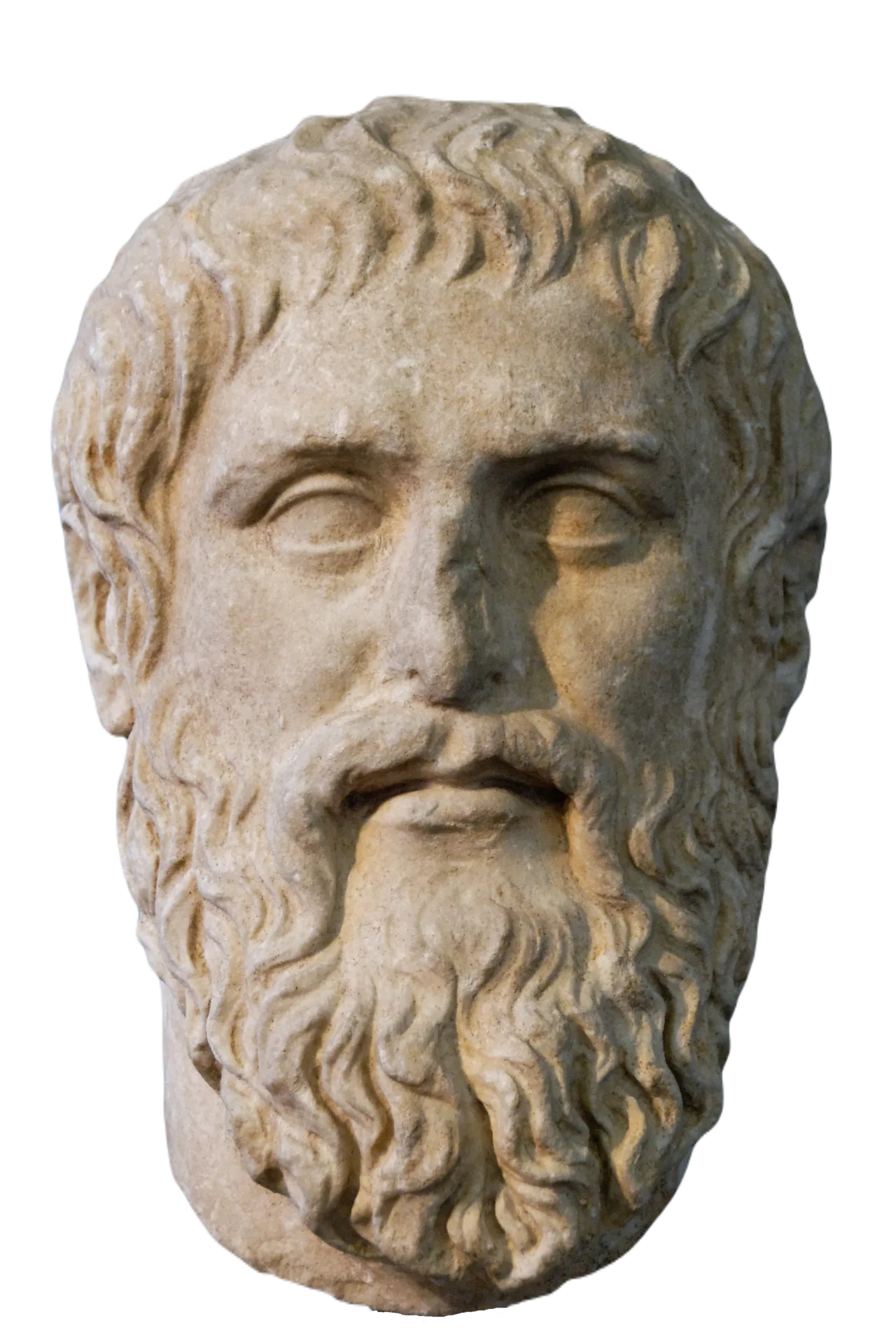
Plato’s dialogue Theaetetus (c. 369 BCE) is the source of what has become the standard starting point — though the dialogue itself examines the definition of knowledge as true belief with an account (logos) and ends by rejecting it. The tradition kept the proposal Socrates found wanting, polished into justified true belief: to know something, you must (1) believe it, (2) it must be true, and (3) you must have adequate justification for your belief. This is often abbreviated JTB.4 (Plato’s Greek distinguishes episteme (knowledge) from doxa (belief or opinion) and aletheia (truth) — the trio JTB is in the business of relating.)
Three conditions, three separate questions:
- Belief: Can you know something you don’t believe? Could you know the answer to a question and still write the wrong answer on a test? (Some philosophers say yes — you might “know” in some implicit sense while consciously believing the opposite.)
- Truth: Can you know something that turns out to be false? If a geography teacher “knows” that the capital of Australia is Sydney, and they are wrong, were they ever knowing, or only believing?
- Justification: What makes a belief justified? Perception? Memory? Testimony? Inference? This is where much of the real work in epistemology happens.
The tripartite definition has the advantage of capturing our intuitions: hunches are not knowledge (no justification), lucky true guesses are not knowledge (no justification), false beliefs are not knowledge (not true).
Plato’s own reason for rejecting the definition lands on the third clause — the logos, the account a knower is supposed to be able to give. Socrates tries three readings of it and none survives. If an account is simply putting your belief into words, then anyone holding a true belief has one already, and the clause adds nothing to belief. If it means listing the elements a thing is made of, the schoolboy sinks it: he writes the first syllable of “Theaetetus” correctly and the first syllable of “Theodorus” wrongly, though he can recite the letters of both — the same account twice, and no knowledge the second time. And if it means naming the mark that distinguishes this thing from every other, the definition eats its own tail: you could not have held a true belief about Theaetetus at all without already grasping what sets him apart, so the clause either repeats the work belief has done or defines knowledge by helping itself to knowledge. The dialogue ends with nothing caught — and the condition Plato could not make work is the one Gettier would break.
1.2 The Gettier Problem
In 1963, Edmund Gettier published a three-page paper — “Is Justified True Belief Knowledge?” — that changed the field overnight.5 He gave two counterexamples showing that you could have a justified true belief that is, intuitively, not knowledge.
The classic reconstruction: Smith and Jones are applying for a job. Smith has strong evidence (the boss told him directly) that Jones will get the job. Smith has also counted the coins in Jones’s pocket: ten coins. Smith therefore believes: The man who will get the job has ten coins in his pocket. This belief is justified. But — unbeknownst to Smith — Smith himself gets the job. And, by coincidence, Smith also has ten coins in his pocket. So Smith’s belief is true. And it was justified.
Gettier’s paper is only three pages. It is one of the most reprinted papers in analytic philosophy. Read it. The full text is freely available at philpapers.org.
Philosophers since 1963 have tried to add a fourth condition, change what we mean by justification, or abandon JTB. None of the proposed solutions has won consensus. The problem remains open.
What it tells us: Justification can be accidentally disconnected from truth.
flowchart TB
  subgraph BEL["Everything you believe"]
    FAL["False beliefs"]
    subgraph TRU["True beliefs"]
      LUCK["Lucky true belief<br/>true, but unjustified"]
      subgraph JTB["Justified true belief"]
        GET["Gettier cases<br/>justified and true —<br/>but true by accident"]
        KNO["Knowledge"]
      end
    end
  end
Return now to Théo. His belief — Trump will win — was true, and it was held for reasons: a specific theory about polling error and a privately commissioned survey built to test it. On the face of it that looks like justified true belief, the very thing JTB says knowledge is. The trouble is the route from his justification to the truth. A single presidential election is one trial; a method that has never been validated against a run of cases can deliver the right answer without that answer being produced by the method’s grip on reality. Théo’s neighbour-poll might have detected a real, hidden Trump majority — or it might have been one plausible story among several, vindicated by an outcome it did not actually track. If the second description fits, his belief has the Gettier shape exactly: justified, true, and true for reasons disconnected from the justification — right, but lucky.
This is what makes the case sharper than an ordinary wrong prediction. Nobody learns much from a forecaster who was confidently mistaken; we simply say the evidence was misread. The whale was confidently right — and richly paid for it — which is precisely the condition under which we are most tempted to credit someone with knowledge they may never have had. The question below turns on whether being vindicated is the same as having known.
1.3 Beyond JTB
Gettier attacks the definition from the inside: he grants all three conditions and shows they do not add up to knowledge. The moves below do something different. They ask whether the definition has the right shape — whether every belief in the structure can be a justified one, and whether knowing that something is the case is the only kind of knowing there is.
Knowledge, belief, opinion. The Greek Plato uses is instructive: episteme (knowledge), doxa (belief or opinion), aletheia (truth). Opinion can be true or false; knowledge, on JTB, must be true. Compare three sentences:
- “I believe it will rain tomorrow.”
- “I know that water is \(\mathrm{H_2O}\).”
- “In my opinion, the painting is beautiful.”
They feel categorically different — but do they differ in what is claimed, or only in how firmly it is held? Wittgenstein presses the question from the other end. In On Certainty (1969) he points to beliefs so basic that doubting them would dismantle the frame in which doubt makes sense: that the earth existed before you were born, that this is a hand. He calls them hinges — not things we know on evidence, but what our weighing of evidence turns on.
At the foundation of well-founded belief lies belief that is not founded.
— Ludwig Wittgenstein, On Certainty §2536
If that is right, JTB cannot be the whole story: a structure of justified beliefs has to rest on something that is not itself justified. Lesson 2 makes exactly this the sceptic’s problem.
Knowledge by acquaintance and knowledge by description. Bertrand Russell drew a distinction in The Problems of Philosophy (1912) that cuts across the JTB debate:7
- Knowledge by acquaintance — direct, unmediated contact with something: you know the colour red by seeing it, pain by feeling it.
- Knowledge by description — knowing about something through propositions: you know that Julius Caesar was stabbed on the Ides of March without having been there.
Russell’s point is that almost everything we know of the world is knowledge by description. We are rarely acquainted with the facts themselves, which puts the weight on the chain that carries them to us — testimony, books, memory. Lesson 5 takes up that chain.
Russell’s reversal. The distinction is worth knowing as Russell drew it, and worth knowing that Russell gave it up. Under Wittgenstein’s criticism in 1913 he abandoned the Theory of Knowledge manuscript mid-book, and by “On Propositions” (1919) acquaintance had gone as a primitive epistemic relation.8 A course that teaches acquaintance as Russell’s settled view is teaching the 1912 Russell, not the philosopher Russell became.
McDowell’s disjunctivism. The idea that perception puts us in direct contact with the world survives its Russellian form. John McDowell argues that seeing and hallucinating share no “highest common factor”: experience is either a case of the fact making itself manifest or a mere appearance, and in the good case your warrant is the world itself rather than an inner seeming.9 Keep it in view for the next lesson — the sceptic’s “it would seem exactly the same from the inside” already assumes the common factor McDowell denies. Lesson 4 returns to the argument in full.
Knowing how and knowing that. Gilbert Ryle separated knowing how — riding a bike, reading a room — from knowing that: Paris is the capital of France.10 The first is procedural, the second propositional, and JTB was built for the second: belief, truth and justification are all things a proposition can have. The cyclist holds no candidate proposition to justify, yet no one denies that they know how to ride. Either knowing-how reduces to a stock of knowing-that — Ryle’s target, and he thought the reduction fails — or JTB defines one kind of knowing among several. Lesson 6 returns to this with Merleau-Ponty and the body’s own knowledge.
Gettier says the definition is incomplete. These four say something sharper: it may be a definition of propositional knowledge, resting on hinges it cannot justify, in a world where much of what we know we never had to justify at all.
1.4 Questions
Questions 2 and 4 are retrieval checks — answer them from memory before you argue the rest.
- If you cannot know you are not dreaming right now, can you know anything about the external world?
- State Gilbert Ryle’s distinction between knowing how (to ride a bike) and knowing that (Paris is the capital of France) — which of the two is procedural and which propositional knowledge?11 Then say which of them JTB was built to define, and what that costs it with the other.
- Can a computer know something? What would it lack, if anything?
- State the structure of a Gettier case: which of JTB’s three conditions are satisfied, and where does luck enter? Then say what the whale’s neighbour-poll shares with that structure — and whether that makes the Gettier problem devastating, or a quirky edge case.
Did the Whale Know Trump Would Win?
Return to Théo, the Polymarket trader from the case above. Before the election he believed — truly, as it turned out — that Trump would win, and he believed it for reasons: a theory that polls understated Trump and a privately commissioned “neighbour” survey that agreed. He staked around $80 million and collected. The Gettier problem has been with us for sixty years and no repair has won consensus. Stop surveying and choose: did he know, or did he get lucky?
Position A (he knew): The neighbour-poll was a genuine truth-tracking method — it was built precisely to detect the shy-Trump-voter effect that had broken the public polls in 2016 and 2020, and it detected it. Théo’s belief was justified by evidence that bore on the very fact in question, that evidence pointed at the truth, and the truth is what happened. That is justified true belief doing exactly what knowledge is supposed to do; calling it “luck” merely because the election runs only once would make all empirical prediction luck.
Position B (he got lucky): A presidential election is a single trial. A method that cannot be tested against repeated outcomes cannot be shown to track the truth rather than to have coincided with it once. Plenty of equally confident bettors with equally elaborate theories lost everything the same night; that Théo’s story was the one vindicated does not show his justification was connected to what made the belief true. Justified, true, and yet not knowledge — the Gettier signature.
Choosing Position A commits you to saying what divides a truth-tracking method from a lucky one before the outcome is known — since after the outcome, every winner looks like a knower. Choosing Position B commits you to saying why this is not knowledge while ordinary empirical predictions (the bridge will hold, the sun will rise tomorrow) are — or to accepting that a great deal of what we call knowledge is, by your standard, lucky true belief.
Commit before we compare. Before the class discussion, write your verdict in two or three sentences — name the side you take and the price you accept for taking it. Then test your own answer:
- Did you separate being right from having known? Théo was right and was paid for it — if your answer lets the payout or the correct call settle the knowledge question, it has not begun.
- Position A: did you say what marks a truth-tracking method off from a lucky one in advance, not just in hindsight?
- Position B: did you say why the whale’s belief is mere lucky truth while everyday empirical predictions count as knowledge — or did you bite the bullet and accept that much of “knowledge” is luck?
2 Am I a brain in a vat?
In 1641, René Descartes sat by a fire and decided to doubt everything he could doubt. His method of systematic doubt — scepticism wielded as a tool, not held as a conclusion — produced one of the most influential arguments in the history of philosophy.
The Deepfake That Sat in for the Whole Boardroom
In mid-January 2024, a finance employee in the Hong Kong office of Arup — the British engineering firm that did the structural work for the Sydney Opera House — received an email, apparently from the company’s chief financial officer in the United Kingdom, instructing him to arrange a confidential transaction. He suspected a phishing scam, and he was right to. What disarmed the suspicion was a video conference: he joined a call on which the CFO and several colleagues he recognised appeared and spoke, looking and sounding like themselves, and told him to proceed. Reassured by the familiar faces, he made fifteen transfers totalling roughly HK$200 million — about US$25 million — to five Hong Kong bank accounts. Every other participant on that call had been an AI-generated deepfake, assembled by the fraudsters from publicly available footage of the real executives; the employee was the only human being present.12 Hong Kong police disclosed the case in February 2024, and Arup confirmed itself as the victim in May; no arrests have been announced and the money has not been recovered.13
2.1 The Method of Doubt
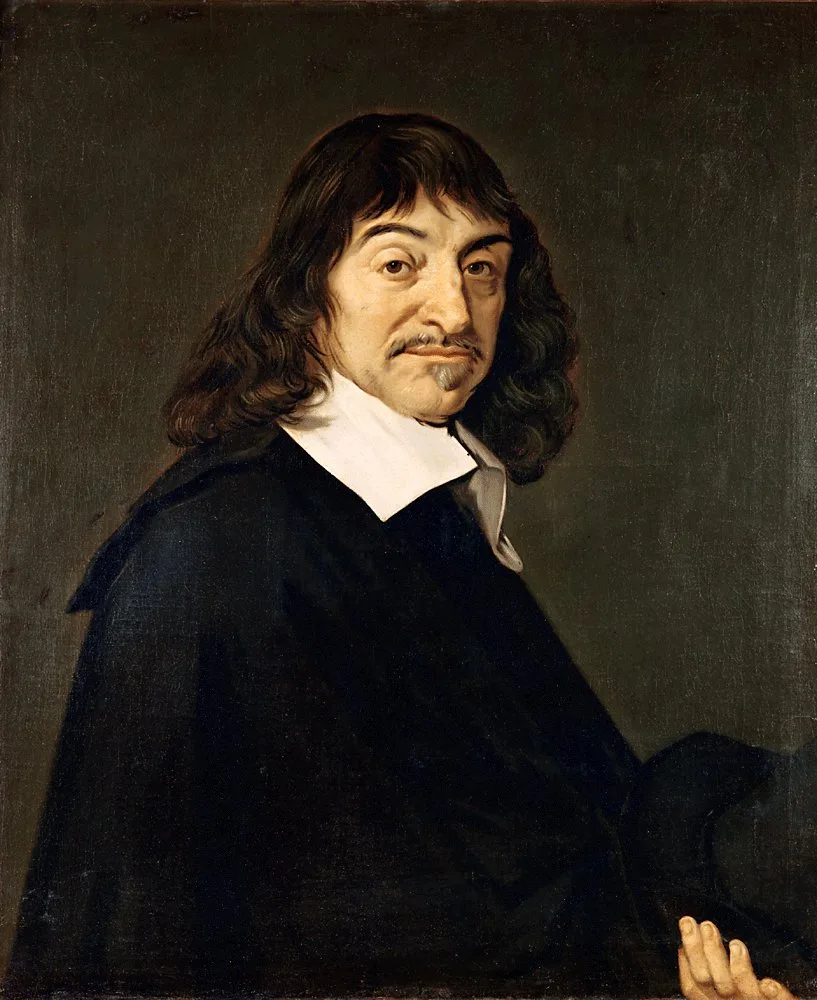
Descartes begins Meditations on First Philosophy by noticing that his senses have deceived him before. Things look different sizes depending on their distance. Straight sticks appear bent in water. If the senses can deceive sometimes, can he trust them at all?
He escalates. Perhaps he is dreaming right now. Everything he experiences might be a dream. You’ve had dreams that seemed real. How do you know this isn’t one?
He escalates further. What if an all-powerful evil demon (malin génie) is deceiving him about everything — not just his senses, but even mathematics? Could 2+2=5 be a deception planted by this demon?
“I will suppose therefore that not God, who is supremely good and the source of truth, but rather some malicious demon of the utmost power and cunning has employed all his energies in order to deceive me.” — René Descartes, Meditations on First Philosophy, Meditation I14
This is not paranoia. It is a philosophical method: if a belief could possibly be false under any scenario, however far-fetched, it cannot serve as a foundation for knowledge.
2.2 The Brain in a Vat
The contemporary version of Descartes’ evil demon is the brain-in-a-vat scenario, articulated by Hilary Putnam in Reason, Truth and History (1981).15 Imagine that you have always been a disembodied brain in a laboratory, kept alive in a vat of nutrients, with all your sensory experiences generated by a supercomputer. Everything you have ever seen, touched, felt, and thought has been a simulation. How would you know?
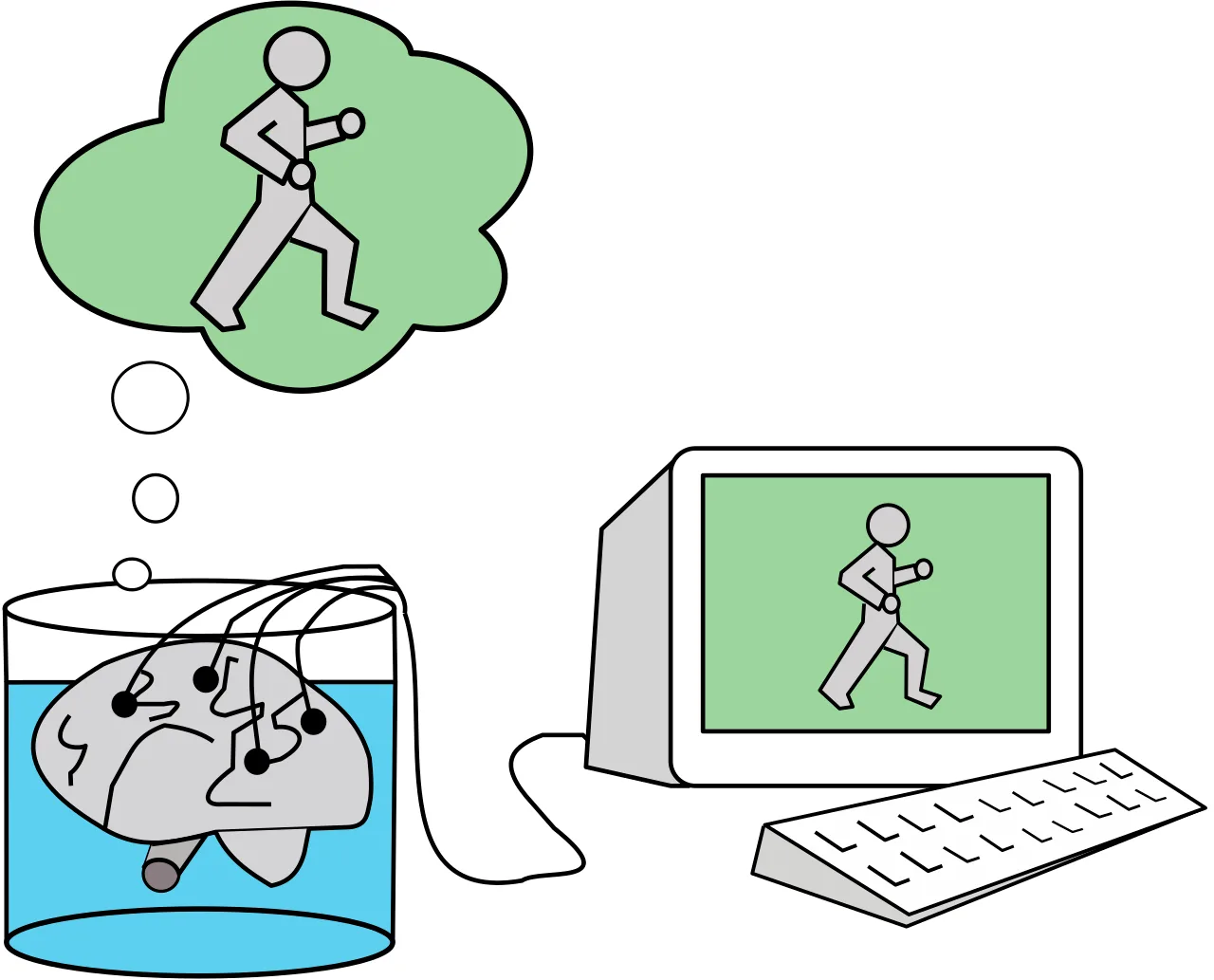
The film The Matrix (1999) is a pop-culture version of this scenario. But the philosophical version predates it by centuries. The Matrix is Descartes with better special effects.
The scenario is logically coherent. There is no internal contradiction in the idea. If it is coherent, then for all you know, it might be true. And if you can’t rule it out, how can you claim to know anything about the external world?
This is external world scepticism: the view that we cannot have knowledge of the world beyond our own minds. Descartes himself didn’t accept this as the final word. He thought he could escape it. The escape route he took — proving God’s existence to guarantee the reliability of his faculties — is not widely accepted today, though Alvin Plantinga’s reformed epistemology defends a version of the move, arguing that without a divine guarantee the reliability of our cognitive faculties is itself unsupported.16 Whether one accepts that reply or not, the Cartesian move has serious twentieth-century defenders.
2.3 The Cogito
At the bottom of the doubt, Descartes finds something he cannot doubt:
“I think, therefore I am.” (Je pense, donc je suis) — René Descartes, Discourse on the Method, Part IV17
The Latin cogito, ergo sum is from Descartes’ Principles of Philosophy (1644, Part I, §7), not the Meditations. In the Meditations on First Philosophy (the later, more rigorous work), the formulation is different: “I am, I exist” — ego sum, ego existo — which Descartes says “is necessarily true whenever it is put forward by me or conceived in my mind” (Meditation II).
The act of doubting itself proves there is a doubter. Even if the demon is deceiving me, there must be a me being deceived. The Arup employee sat in a meeting in which every other face was a fabrication, and was, on Descartes’ picture, the cogito’s residue made vivid: a deepfake can counterfeit every other participant on the call, but not the one it is aimed at deceiving — whatever else was in doubt, the deception was happening to someone.
Descartes treats this as the unshakeable foundation: I exist as a thinking thing.
But the cogito raises its own problems:
- Does “I think” already smuggle in the assumption of an “I”? Lichtenberg argued that all Descartes can know is that there is thinking, not that I am doing it.18
- If the cogito is the only certainty, it is thin. What can you build on “I exist as a thinking thing”?
- Hume later argued that when he introspected to find the “I”, he never caught anything — only a bundle of perceptions. There is no unified self.19
2.4 Responses to Radical Scepticism
Philosophers have not simply accepted that we know nothing — this would be a strange response from people whose entire professional existence depends on the possibility of knowing things. Several responses follow. The textbook habit is to list them as a buffet; this obscures that they are doing very different things. Some try to refute the sceptic on the sceptic’s own terms (Moore, Putnam’s externalist argument). Some try to change the subject — to show, with Wittgenstein, that the sceptic’s question is not the question it appeared to be. Some accept and deflate the sceptic’s conclusion (the pragmatists). These are not interchangeable moves, and the sceptic’s grip depends on theoretical commitments that can themselves be put in question.20
Moore’s common sense (G.E. Moore, “Proof of an External World”, 1939): Moore held up his hands and declared, “Here is one hand, and here is another”; external things, he concluded, therefore exist.21 This seems ludicrous as a philosophical argument, but Moore’s point was that the certainty of the external world is more certain than any philosophical argument against it.
Externalism (Hilary Putnam): Putnam — who introduced the brain-in-a-vat scenario — also argued that if you were a brain in a vat, your word “vat” wouldn’t even refer to real vats (since all your experience of “vat” comes from the simulation). This is a subtle semantic argument that the scenario may be self-undermining.
Wittgenstein on hinges: In On Certainty, Wittgenstein argues that some beliefs function as hinge propositions — they are not things we test against evidence, but the framework within which testing happens at all. The proposition that the earth has existed for many years past is not a hypothesis I entertain; it is a hinge. Doubting it isn’t possible inside a normal form of life.22 As Wittgenstein puts it: “At the foundation of well-founded belief lies belief that is not founded” (On Certainty, §253).23 The Arup employee proceeded on a hinge — that the colleagues he could see and hear were his colleagues — and the fraud succeeded not by defeating that certainty in argument but by exploiting it: you cannot conduct a video meeting while treating each familiar face as a hypothesis awaiting proof, and the deepfake turned exactly that un-testability into a weapon.
Zhuangzi’s butterfly dream (Zhuangzi, Book II, “Discussion on Making All Things Equal,” ~4th c. BCE): “Once Zhuang Zhou dreamt he was a butterfly, a butterfly flitting and fluttering around, happy with himself and doing as he pleased. He didn’t know he was Zhuang Zhou. Suddenly he woke up and there he was, solid and unmistakable Zhuang Zhou. But he didn’t know if he was Zhuang Zhou who had dreamt he was a butterfly, or a butterfly dreaming he was Zhuang Zhou. Between Zhuang Zhou and a butterfly there must be some distinction! This is called the Transformation of Things.”24 Zhuangzi raises the same scenario Descartes will raise two thousand years later but draws a different conclusion: not “doubt everything until something certain remains,” but “the demand for a vantage-point above the dreaming and the waking is itself the mistake.” On the Zhuangzian reading the sceptic and Moore are both committed to a perspective from which the question can be settled — and the genuine philosophical move is to notice that no such perspective is available.
Pragmatism: William James and John Dewey argued that the question “am I really perceiving the external world?” is meaningless if it makes no practical difference. The sceptical hypothesis, by design, makes no predictions different from ordinary realism.25
flowchart LR
  DOU["The sceptical doubt:<br/>nothing inside experience<br/>rules out the demon,<br/>the dream, the vat"]
  DOU --> R["Refute<br/>the doubt is false"]
  DOU --> S["Dissolve<br/>the doubt has no<br/>coherent target"]
  DOU --> F["Deflate<br/>the doubt is idle"]
  R --> R2["Moore's two hands<br/>Putnam's semantic argument"]
  S --> S2["Wittgenstein's hinges<br/>Zhuangzi's butterfly"]
  F --> F2["James and Dewey:<br/>it predicts nothing<br/>ordinary realism does not"]
2.5 What is Left to Know?
Descartes’ inquiry doesn’t leave us with nothing. It leaves us with a precise map of what we can and cannot justify:
- The existence of our own mental states (certainty)
- Mathematical and logical truths (highly certain, but vulnerable to demon scenarios)
- The existence and nature of the external world (not directly justified from the inside)
The limits of Cartesian doubt mark the boundary between knowledge that survives the demon scenario (one’s own mental states, at minimum; perhaps mathematics; perhaps the cogito) and knowledge that does not (the external world, other minds, the past as remembered).
2.6 Questions
Questions 1 and 3 are retrieval checks — answer them from memory before you argue the rest.
- Could you ever prove — not just assume — that you are not a brain in a vat? Two things to state from the lesson before you answer: why no test run from inside the stream of experience can settle it, and what Putnam’s semantic argument claims about the sentence “I am a brain in a vat.”
- Is Moore right that common sense certainties should override philosophical arguments? Or does that just refuse to engage with the question?
- Descartes thought the cogito was the one thing immune to doubt. State the two challenges the lesson put to it: Lichtenberg’s objection about the “I”, and what Hume reports finding when he introspects. What assumptions does the cogito turn out to rely on?
- If we cannot know whether we’re in a simulation, should that change how we live? Or is the question practically meaningless?
Once the Demon Is Buildable, How Do You Answer the Doubt?
Return to the Arup call. The employee, looking at familiar faces and hearing familiar voices, had no way from inside the experience to tell the manufactured CFO from the real one — and the difference cost his employer roughly US$25 million. Generalise the situation: a live video of a known face can now be fabricated in real time, so the brain-in-a-vat doubt has acquired a working, commercial instance — not the whole external world at once, but any given person on a screen. Answer the doubt: is the colleague I am looking at real? The lesson has put three responses to scepticism on the table, and they are not three flavours of one answer — they disagree about what kind of thing the doubt even is. Answer from one of them.
Refute (Moore, Putnam): meet the doubt on its own ground. There is a test the deepfake cannot pass — a hand the demon cannot fake: an out-of-band callback to a number you already trust, a question only the real CFO could answer, a meeting in the flesh. And Putnam’s point bites too — a video that convincingly fakes this CFO had to be trained on a real one it parasitises. The doubt is a false claim, and you can say why it is false.
Dissolve (Wittgenstein, Zhuangzi): the doubt has no coherent target. That the colleagues in a meeting are real people is not a hypothesis you test as the meeting runs but a hinge the meeting turns on; the employee could not have transacted at all while treating every familiar face as a claim awaiting proof. The deepfake did not refute the hinge — it exploited the fact that a hinge is not, in the moment, the kind of thing one stops to check.
Deflate (James, Dewey): the doubt is idle because nothing turns on it. A sceptical scenario, by design, predicts exactly what ordinary reality predicts, so it changes no expectation and licenses no action — except that this scenario did predict something ordinary realism did not, and the prediction was worth twenty-five million dollars. The deflater’s move was built for a doubt that makes no practical difference; here the practical difference is the whole of the case.
Answer from one — and own the bill the other two would hand you. If you refute, say what answers the doubt for the person who cannot run the test from inside the experience: the employee was on the call, with no second channel open, and Moore’s hand never reached him. If you dissolve, say what separates a hinge from a default that an adversary can manufacture and weaponise — the deepfake industrialises exactly the face-recognition the meeting could not pause to verify. If you deflate, say why “no practical difference” survives a case in which the difference was twenty-five million dollars — or concede that the deepfake doubt is the rare sceptical hypothesis that does cash out in practice, and so the one pragmatism cannot set aside.
Choose your move before the next call connects. In writing, before anyone speaks: two or three sentences naming the move you make — refute, dissolve, or deflate — and the bill you accept from the other two. Then test your own answer:
- Did you treat the three as genuinely rival — disagreeing about what kind of thing the doubt is (a false claim, an incoherent target, an idle one) — and not as three tones of the same dismissal?
- If you refuted: what answers the doubt for the person who has no test available from inside the experience, as the Arup employee did not — when Moore’s hand never reaches him?
- If you dissolved: what separates a hinge from a default an adversary can manufacture? If you deflated: how does “no practical difference” survive a difference of twenty-five million dollars?
3 What is truth?
“What is truth?” — Pontius Pilate asked the question and didn’t wait for the answer. He may have been wiser than he looked. Everyone wants to know the truth. Politicians say they’re speaking it. Scientists claim to discover it. Courts try to establish it. The major philosophical accounts of what truth is, however, have continued to disagree — and each captures something the others have to concede.
The Truck That Rolled Downhill
In December 2016 the entrepreneur Trevor Milton unveiled the “Nikola One,” a hydrogen-electric semi-truck he presented to a Salt Lake City audience as a finished, functioning vehicle; thirteen months later his company released a glossy promotional video, “Nikola One in Motion,” that appeared to show the truck cruising under its own power down an open road.26 Nikola went public through a reverse merger, and in June 2020 it briefly carried a stock-market value above the Ford Motor Company’s — roughly $29 billion, on a share price near $65 — while in September General Motors announced it would take an 11 percent stake worth about $2 billion and help build Nikola’s pickup. Then the short-seller Hindenburg Research published its report. The truck in “Nikola One in Motion,” it found, had never driven at all: the company had towed an inert prototype to the top of a shallow grade and filmed it rolling down under gravity, the camera tilted so the slope would read as level road. Nikola conceded the point.27 The General Motors equity deal collapsed, the stock cratered, and Milton was convicted of securities and wire fraud on 14 October 2022, sentenced in December 2023 to four years — and granted a full presidential pardon on 27 March 2025.28
3.1 The Correspondence Theory
The oldest and most intuitive theory: a statement is true if and only if it corresponds to reality. To say “it is raining” is true just in case it is, in fact, raining.
Aristotle stated this with admirable clarity:
“To say of what is that it is not, or of what is not that it is, is false, while to say of what is that it is, or of what is not that it is not, is true.” — Aristotle, Metaphysics, Book IV, Chapter 729
Truth is about the world fitting the words.
The problems:
- What are the “truth-bearers”? Sentences? Propositions? Thoughts? In different languages, different sentences express the same truth — so the truth-maker must be something language-independent.
- What is the “correspondence relation” exactly? It can’t be resemblance (the word “cat” doesn’t look like a cat). Correspondence turns out to be difficult to cash out precisely.
- How does correspondence work for abstract truths? “7 is prime” corresponds to what, exactly, in physical reality?
3.2 The Coherence Theory
Rather than asking whether a belief corresponds to external reality, the coherence theory says: a belief is true if it coheres with a system of beliefs. Truth is internal consistency within a web.
This sounds strange, but it has a serious motivation: we never have direct access to reality independent of our beliefs. All our evidence for the world comes through our perceptual, conceptual, and theoretical frameworks. There is no “view from nowhere.” So the only available criterion of truth is whether beliefs hang together.
F.H. Bradley and later Bernard Bosanquet (British Idealists, late 19th century) developed this view.30 It is also reflected in Neurath’s “ship” metaphor: we are always rebuilding the ship of knowledge while at sea. We cannot put every plank on dry land at once.31
The problem: Two incompatible and internally coherent belief systems could both be “true” by this criterion.
3.3 The Pragmatic Theory
William James (1907) proposed a radical alternative: a belief is true if it works — if believing it is useful, if it “pays” in terms of practical experience.
“‘The true,’ to put it very briefly, is only the expedient in the way of our thinking, just as ‘the right’ is only the expedient in the way of our behaving.” — William James, Pragmatism, Lecture VI32
This has a democratic, anti-elitist feel: truth is not some mystical correspondence with a Platonic realm, but a practical instrument for navigating experience.
The problem: It seems possible for a false belief to be useful. Believing you are invincible might help you win a fight (briefly). And some truths seem useless or actively harmful in the short term.
The earlier Cardiff Giant hoax of 1869 — a planted gypsum statue mistaken for a petrified biblical giant33 — is the textbook precursor: a false belief that paid (admission fees, religious controversy, newspaper coverage) until it didn’t, with the same logical shape Nikola would later display on a stock exchange. Pragmatism’s defenders reply that the working-out was the falsification, and that “pays by the way” never meant “is currently profitable”; pragmatism’s critics reply that any account that needs that much qualification has handed the work back to correspondence.
flowchart LR
  T["A belief is true<br/>when it…"]
  T --> C["…matches how<br/>things are<br/><b>Correspondence</b><br/>Aristotle, Tarski"]
  T --> H["…hangs together with<br/>the rest of what you hold<br/><b>Coherence</b><br/>Bradley, Neurath"]
  T --> P["…pays its way<br/>in experience<br/><b>Pragmatic</b><br/>James, Dewey"]
  C --> C2["You cannot step outside<br/>belief to inspect<br/>the match"]
  H --> H2["A consistent fiction<br/>coheres perfectly"]
  P --> P2["Useful falsehoods work —<br/>the Nikola One<br/>paid for four years"]
Tarski and the Liar. Alfred Tarski’s “The Concept of Truth in Formalized Languages” (1933) proposed the T-schema: “Snow is white” is true iff snow is white.34 Trivial-looking; its work is to bar a language from containing its own truth predicate. The Liar (This sentence is false — usually attributed to Eubulides, 4th c. BCE)35 is what the bar is for: by separating object-language from meta-language, Tarski blocks the contradiction. Modern deflationary (or minimalist) theories of truth argue the schema is all that needs to be said.
3.4 Questions
Questions 2 and 4 are retrieval checks — answer them from memory before you argue the rest.
- Can there be more than one “true” account of an event? (Multiple witnesses, different but equally accurate perspectives?) Is this coherentism, or just multiple truths?
- Name the three theories of truth this lesson set out, and give the one-line test each applies to a claim. Which tests did “the Nikola One drives” pass for four years, and which did it fail the whole time — and is James’s “pays by the way” then just usefulness misnamed?
- Does it matter, for practical purposes, which theory of truth is correct? Or is this a purely academic dispute?
- State the Liar’s structure: what follows if “This sentence is false” is true, and what follows if it is false? Then state what Tarski’s separation of object-language from meta-language does to block it. Does the block resolve the paradox or quarantine it — and does that mean logic has limits? (Preview of the Logic unit on Gödel.)
Was the Nikola Truck’s Demo True?
The case is in the info-box above. For four years the claim that “Nikola One in Motion” was built to sell — that Nikola had a working hydrogen-electric truck — paid handsomely: a market value briefly above Ford’s, a $2 billion General Motors partnership, paper billions for its founder. Pragmatist William James said a true belief is one that “pays by the way.” Was his account satisfied here, or refuted?
Position A (correspondence): The claim was false the whole time it was paying. The truck in the video never moved under its own power; it rolled downhill. Whatever the stock did, there was a fact about whether that truck could drive, and the answer was no — before, during, and after the billions. James’s criterion confuses what truth is for (guiding action) with what truth is (matching the world).
Position B (pragmatist, against the naïve reading): James did not mean that any paying belief is true; he meant a belief pays by the way only if it keeps paying across the full course of inquiry — and a fraud that one short-seller’s report could detonate was never going to. The Nikola claim was always going to crash; when Hindenburg pulled the slope out from under it, it was revealed as never having genuinely paid.
Choose one. Position A must say what the “matching the world” relation actually consists in. Position B must distinguish the Nikola claim from a belief that survives inquiry for centuries — does surviving the course of inquiry entail truth on your view, or does some further criterion divide them?
Put your verdict on the record before trading opens. Written, before the discussion: three sentences at most — the account of truth you back, and the concession backing it signs you up to. Then test your own answer:
- Did you separate what makes the claim true from whether it was paying? Nikola was worth more than Ford while its flagship truck could not drive — if your answer lets those two run together, it has not started.
- Position A: did you say what the “matching the world” relation actually consists in, beyond restating that it matches?
- Position B: did you give the criterion that divides Nikola from a belief that survives inquiry for centuries — or does surviving the course of inquiry, on your view, just mean truth?
4 Can we trust our senses?
Look at a stick standing in a glass of water. It bends at the surface. Philosophers and psychologists have spent two and a half millennia asking what to make of that. Perception clearly can go wrong; what is at stake here is what its going wrong implies about the kind of access perception gives to the world at all.
Webb’s “Representative Colour” and the Cat’s Paw Nebula
On 10 July 2025, to mark the James Webb Space Telescope’s third year of science, NASA released a near-infrared image of the Cat’s Paw Nebula (NGC 6334), a star-forming cloud some 4,000 light-years away in Scorpius — young stars carving cavities in gas and dust, their glow rendered in blue.36 The image is luminous and, in a precise sense, not a photograph of anything an eye could see. Webb observes in infrared, which is invisible to us; each of its filters records a different infrared wavelength as a separate black-and-white frame.37 Imaging specialists at the Space Telescope Science Institute then assign those frames to colour channels chromatically — the shortest wavelength captured becomes blue, the longest becomes red — mapping an order the eye cannot perceive onto one it can. NASA calls the result “representative colour”; critics call it “false colour.”38
4.1 The Müller-Lyer Illusion
Look at two lines of equal length, one ending in inward-pointing arrowheads (<–>) and one in outward-pointing arrowheads (>–<). The second looks longer. Measure them: they are identical. Now look again. It still looks longer. This is the Müller-Lyer illusion, described by Franz Carl Müller-Lyer in 1889.39
The Müller-Lyer illusion is useful not because it’s surprising but because it is persistent. Knowing the truth does not correct the perception. This is important: our sensory systems are not updated by our rational beliefs.
Perceptual systems do not record passively; they interpret, using context, angles, and prior assumptions to build our experience. The brain fills in and edits constantly.
4.2 Russell’s Table
These cases — disagreement that survives knowing the truth — make a metaphysical question pressing. Bertrand Russell opens The Problems of Philosophy (1912) by asking you to look at a table. You might say the table is brown. But the colour you see depends on the lighting. The shape looks different from different angles. The texture changes depending on your distance from it.
“It becomes evident that the real table, if there is one, is not the same as what we immediately experience by sight or touch or hearing.” — Bertrand Russell, The Problems of Philosophy, Chapter 140
Russell distinguishes between sense-data (what we directly experience — patches of colour, sounds, sensations) and physical objects (the supposed real things causing those experiences); on his view we only ever perceive sense-data.
Russell’s distinction creates the problem of the external world: if all I ever directly experience is my own sense-data, how do I know there is a world of physical objects behind it? How do I know the table persists when no one is looking?
Russell’s other distinction. Alongside sense-data/physical-objects, Russell drew a distinction between knowledge by acquaintance (direct contact: sense-data, mental states, universals) and knowledge by description (propositional knowing — that Caesar crossed the Rubicon).41 Russell himself later gave acquaintance up: Wittgenstein’s criticisms in 1913 sank the theory of judgment he had built on it — he abandoned the Theory of Knowledge manuscript mid-book — and by 1919 he no longer treated acquaintance as a primitive relation.42
George Berkeley (1685–1753) drew the radical conclusion: esse est percipi — to be is to be perceived. There are no physical objects independent of perception; there is only God and minds and their ideas.43 Samuel Johnson, walking with Boswell in 1763, kicked a large stone and said “I refute it thus.” Berkeley’s defenders reply that the kick produces a sensation of pain — which Berkeley never denied — but that nothing in the kick proves there is anything behind the sensation. Berkeley’s critics reply that mind-independent objects are the simplest hypothesis explaining the regularity, intersubjectivity, and predictability of perception (why do unwatched apples rot the way they do? why do other observers report the same readings I do, even when their interests would have inclined them to report otherwise?). Berkeley’s own reply to that — that God’s perception sustains the world in our absence — is the move on which the whole position stands or falls.
4.3 Locke’s Primary and Secondary Qualities
John Locke (An Essay Concerning Human Understanding, 1689) offered a more moderate response. He distinguished:44
- Primary qualities: features of objects that are genuinely in the objects themselves — size, shape, number, motion, solidity. These ideas in our minds resemble how things really are.
- Secondary qualities: features that exist in the object only as powers to produce sensations in us — colour, sound, taste, smell, temperature. The tomato’s redness is not in it the way its shape is. Redness is what the tomato’s surface reflectance does to our visual system.
Is the pain in your foot, or in your brain? Locke’s distinction between primary and secondary qualities is related: the sensation is in you; the stimulus is out there.
Modern science reflects this split: physics describes the world in terms of mass, charge, and position rather than in terms of colour, taste, or beauty.
flowchart LR
  OBJ["The object"]
  OBJ -- "genuinely in it" --> P["<b>Primary qualities</b><br/>size · shape · number<br/>motion · solidity<br/><br/>your idea resembles<br/>how things are"]
  OBJ -- "only a power to<br/>produce sensations" --> S["<b>Secondary qualities</b><br/>colour · sound · taste<br/>smell · temperature<br/><br/>the redness is in you,<br/>not in the tomato"]
Webb’s images are a clean Lockean case: colour is treated openly as a secondary quality — a code an instrument assigns to primary differences (wavelength, energy) that no eye can register. Locke’s distinction predicts that the colour is “in us”; what it does not so comfortably predict is that the encoding the telescope performs deliberately is one the eye performs unwittingly, for every colour anyone has ever seen.
The problem with Locke: Berkeley immediately objected that we have no reason to trust primary qualities either. If colour is in the mind, what makes shape any different? The “resemblance” between our idea of shape and the shape itself cannot be verified, since the only access we have to “the shape itself” is through more ideas of shape.
4.4 The Reliability of Perception
Contemporary philosophy of perception divides into several camps. Each picture handles Webb’s colours differently and pays a different price.
- Naive realism (direct realism): we directly perceive physical objects, not intermediaries. The stick in water is straight; we just misjudge it.
- Representationalism: we perceive internal mental representations of the world. The question is whether those representations are reliable.
- Disjunctivism: genuine perception (of a real object) and hallucination are fundamentally different kinds of mental states, even if they feel the same from the inside.
flowchart LR
  Q["What stands between<br/>you and the object?"]
  Q --> N["<b>Naive realism</b><br/>Nothing. You perceive the<br/>object itself; the stick is<br/>straight and you misjudge it"]
  Q --> R["<b>Representationalism</b><br/>A mental representation.<br/>The question becomes<br/>whether it is reliable"]
  Q --> D["<b>Disjunctivism</b><br/>Wrong question. Seeing and<br/>hallucinating are different<br/>kinds of state — no<br/>highest common factor"]
The trichotomy is a useful first map, but it can mislead. Disjunctivism is not a “third way” between naive realism and representationalism in the manner of a compromise; it is a structural disagreement about what kind of state perceiving even is.
In “Criteria, Defeasibility, and Knowledge” (1982), McDowell argues that the sceptic’s argument trades on a hidden assumption — that perception and hallucination share a “highest common factor” — and once that assumption goes, the argument loses its grip. Which view is right turns in part on how the sceptical problem has been set up in the first place.45
4.5 Does Attention Constitute Its Object?
The lesson has so far treated the scene before your eyes as given, and asked what kind of contact you have with it. One pressure remains: whether the scene is given at all. In Simons and Chabris’s celebrated experiment (1999), viewers asked to count basketball passes were shown a video in which a person in a gorilla suit walks into the middle of the game, thumps its chest, and walks off; roughly half of them never saw it.46 The phenomenon is called inattentional blindness, and the name carries a whole theory inside it: the scene was there, complete, gorilla included, and attention is a narrow gate that let only some of it through to you. Call this the filter picture. It is the picture built into the ordinary metaphors — attention “caught,” “paid,” “grabbed” — and into the psychology of limited bandwidth: the world arrives ready-made, and attending selects which parts of it you get.
A line of thinkers — an art critic, a phenomenologist, a philosopher of perception — holds that the filter picture has the process backwards in one precise respect: attention does not select from a scene that is already assembled; it does part of the assembling.
Theory-ladenness is this claim scaled up from a glance to a discipline. Hanson’s Patterns of Discovery (1958) — the natural sciences unit works through it — argues that Kepler and a Ptolemaic astronomer, watching one dawn, do not see the same event through different theories; the theories reach into the seeing.
John Berger opens Ways of Seeing (1972) — a book about paintings, not laboratories — by denying that seeing is mechanical registration: “We only see what we look at. To look is an act of choice.” What the choice yields is not a selection but a situation: “We never look at just one thing; we are always looking at the relation between things and ourselves.” And the paragraph ends on the strongest word available — vision is “continually holding things in a circle around itself, constituting what is present to us as we are.”47 Constituting, not filtering: on Berger’s account, what is present to you — the scene itself, not merely your report of it — is partly your looking’s work.
Maurice Merleau-Ponty had made the same denial philosophically exact a generation earlier. In Phenomenology of Perception (1945) he weighs the searchlight analogy — the filter picture’s own favourite metaphor — and rejects it in a clause: it “presupposes given objects on to which the beam plays,” whereas the function that directs us at the world, “before bringing objects to our sight or knowledge, makes them exist in a more intimate sense, for us.” His name for that function is the intentional arc: the life of consciousness “is subtended by an ‘intentional arc’ which projects round about us our past, our future, our human setting” — so that what shows up for you is already shaped by what you have done, what you can do, and what you care about.48 (His companion claim — that it is the knowing body that carries most of this — is taken up in the intuition lesson.)
Bence Nanay restates the claim in the vocabulary of current philosophy of perception by distinguishing ways of exercising attention. Looking for a cab, your attention is fixated: one feature — yellow — scanned across many objects. Defusing a bomb, it is fixated on many features of one object. In aesthetic experience it is open-ended: distributed across many features of one object “but not with a specific aim or goal in mind.” The distinction is doing constitutive work — “Attending to a relevant feature can completely transform your experience.” His example is Bruegel’s Fall of Icarus: a quaint ploughing scene until your attention finds the drowning legs in the corner of the canvas, and never quite that painting again.49 Two viewers before one picture, one scanning for the subject, one dwelling on the whole, are not — on Nanay’s account — receiving different quantities of a single given experience. They are having different experiences: the exercise of attention is part of what the experience is.
The dispute changes what expertise in looking amounts to. A follow-up to the gorilla experiment asked radiologists to hunt for lung nodules in chest CT scans into which a gorilla — many times a nodule’s size — had been matted; a large majority of the experts never reported it, and eye-tracking showed that most of those who missed it looked straight at it.50 On the filter picture this is an embarrassment: the best-trained filters in the hospital passed over the largest object in the scan. On the constitutive picture it is what training means: years of practice have built a way of looking in which lung-things show up and gorillas do not — the very way of looking that finds a nodule no novice could see. Expertise in looking is then Ryle’s knowing how51 operating inside perception itself: skill deciding, before any belief is formed, what there is to have beliefs about. Russell’s knowledge by acquaintance (margin note above) was supposed to be the innocent, unearned floor of knowing; if the constitutive claim is right, acquaintance can be trained — and the floor is built. Put plainly: on this picture, even “just looking” is a skill, and what you see is partly what you have learned to see.
One case sits awkwardly for both sides. In February 2015 a snapshot of a striped dress divided the internet: most viewers saw it as blue and black — which the dress in fact was — while a large minority saw white and gold, and the split ran through households, classrooms, and vision labs alike. The favoured explanation is that the photograph strands the visual system’s normally invisible assumption about the ambient light: viewers whose systems discount bluish daylight see white and gold; those who discount warm artificial light see blue and black.52 The filter picture struggles here, because nothing was filtered — both groups attended to the same pixels with full concentration and were given different scenes. But the constitutive side inherits its own embarrassment, because nothing was chosen either. No act of looking, no effort of will, moves a viewer from one dress to the other; as with the Müller-Lyer lines, the construction happens upstream of choice. If attention helps make the scene, the Dress shows the making running deeper than attention — Berger’s “act of choice” is at most the top layer of an assembly the chooser never sees.
What the disagreement makes visible is that the lesson’s question has been double all along. On the filter picture, “can we trust our senses?” asks whether enough of a ready-made world gets through the gate. On the constitutive picture, a prior question opens underneath it: how much of what arrives was assembled in the arriving — by attention, by training, by the assumptions the Dress exposed. The missing gorilla was, on the first picture, a failure of bandwidth; on the second, it is a fact about what your world contained for that minute. Each of the three camps above — naive realist, representationalist, disjunctivist — still owes an answer to whichever picture of attention it adopts, and the questions below press the choice.
4.6 Questions
Questions 1 and 2 are retrieval checks — answer them from memory before you argue the rest.
- The Müller-Lyer lines still look unequal after you have measured them. State what that persistence shows about the relationship between perception and belief: which of the two updates the other, and which does not?
- State Locke’s sorting: which qualities are primary, which secondary, and what does he claim only of the primary ones? Then state Berkeley’s attack — why, on his argument, does the resemblance claim fail? Is the distinction stable?
- Does it matter for daily life whether we are directly perceiving the world or representing it? Or is this a distinction without a practical difference?
- If different species perceive the world very differently (dogs smell what we can’t; bats echolocate), which perception is “correct”? Is there a fact of the matter about what the world “really” looks like?
- The gorilla experiment is usually summarised as “we miss what we do not attend to.” Rewrite that moral twice — once assuming attention filters a ready-made scene, once assuming attention helps constitute the scene. Which rewrite better fits the radiologists who looked straight at the gorilla and did not see it — and which better fits the Dress, where no shift of attention changes anything?
Is Webb’s Colour a Fabrication — or Is All Colour?
Return to the case from earlier in the lesson: a luminous image of the Cat’s Paw Nebula in which the colours are assigned by machine — infrared wavelengths the eye cannot see, mapped by chromatic ordering onto the visible palette, shortest wavelength to blue, longest to red. NASA calls it “representative colour”; the sceptic calls it a fabrication. Same photons; a colour no eye would ever register. The question is what this tells us about the colours you do see.
Position A (qualified direct realism): Webb’s colours are a special, stipulated case — a useful code for data, not perception of anything. Ordinary seeing is different in kind: when you look at a red rose in daylight you directly perceive a colour the object really presents. The telescope translates the invisible; the eye reveals the visible. Do not let an engineering convention rewrite what ordinary perception is.
Position B (representationalism): Webb’s colours are not a special case; they are an honest, public version of what the eye always does. Colour is the brain’s encoding of wavelength differences — the retina assigns “red” to one band of radiation and “blue” to another exactly as the imaging specialist assigns blue to one infrared filter and red to the next. The eye’s band is merely the one evolution tuned it to; nothing about it is more “real.” This is also why knowing the Müller-Lyer lines are equal does not make them look equal: the encoding — not your beliefs — does the work, and it is not updated by what you happen to believe.
Choose one. Position A must say what marks the eye’s colour off as genuine perception while the telescope’s is mere code, given that both assign visible colour to physical wavelength the perceiver cannot otherwise register. Position B must say how the view avoids Berkeley’s idealism — if all colour is the brain’s code, what is the wavelength out there that the code is a code of?
Caption the image before the class compares notes. In writing, before anyone speaks: two sentences, three if you need them — the side you take on what the eye does, and the embarrassment your side agrees to live with. Then test your own answer:
- Did you name which embarrassment your side has to live with — not just which side is right, but the case it cannot comfortably absorb?
- Position A: what marks the eye’s colour off as genuine perception while the telescope’s is “mere code,” given that both map visible colour onto physical wavelengths the perceiver cannot otherwise register?
- Position B: what work does the wavelength out there do in the brain’s encoding — how does the view avoid Berkeley’s idealism?
5 Why should I believe what others tell me?
Take an inventory. You “know” that Antarctica exists, that Caesar crossed the Rubicon, that Sirius is a star, that your birthday is the date written on your passport, that the medication on the chemist’s shelf is what the label says it is. Almost none of this knowledge is yours by direct acquaintance. You have it because somebody told you — a teacher, a parent, a textbook, a stranger in a uniform, an anonymous Wikipedia editor, a journalist you have never met. Strip out everything you accepted on someone else’s word, and what survives would not get you through breakfast. So is testimony — being told that p — a genuine source of knowledge in its own right? Or is it only a derivative source, one that has to be cashed back into perception and inference before it counts? That dispute runs straight through the philosophy of how anyone gets through their day — and, below, through an institution that took a machine’s word over hundreds of people’s.
The Post Office and the Horizon System
Between 1999 and 2015 more than 900 subpostmasters — the local agents who run Britain’s Post Office branch counters — were prosecuted and convicted of theft, fraud, or false accounting, most of them on private prosecutions brought by the Post Office itself. The evidence was Horizon, the branch-accounting system built for the Post Office by Fujitsu, which reported shortfalls in the branch accounts. The subpostmasters, each working alone or in a small shop, were held personally liable for the missing money; one after another, they insisted they had taken nothing and could not say where the figures came from. Some were imprisoned; many were bankrupted making good shortfalls that existed only on a screen; the convictions have been linked to at least thirteen suicides.53 The shortfalls were not real. Horizon was riddled with bugs that could conjure losses out of nothing, and defects were known within Fujitsu early in the system’s life but not disclosed to the courts that convicted on the strength of its records. Public attention caught fire only in January 2024, when the ITV drama Mr Bates vs The Post Office dramatised the campaign led by the subpostmaster Alan Bates; the statutory public inquiry that followed ran through 2024, and the first volume of its report appeared in 2025.54
5.1 Testimony as a Source
Jennifer Nagel observes that “many of our prized possessions come to us second-hand.”55 The technical term is testimony: someone tells you something, in speech or writing, and the content of what they say plays a special role in what you take from the exchange. (You overhear a friend say “I have a hoarse voice” and hear that the voice is hoarse — that is perception. You read in a newspaper that there has been an earthquake in Turkey — that is testimony.) Testimony so understood is the load-bearing source for almost everything we know about history, geography, science we did not personally do, and the lives of everyone we have not personally observed. Robert Audi puts the structural point bluntly: “If perception, memory, consciousness, and reason are our primary individual sources of knowledge and justification, testimony from others is our primary social source of them.”56 The philosophical question is whether testimony is another basic source — like perception — or whether it is at best a derivative source, parasitic on the others.
5.2 Reductionism: The Hume Position
The reductionist holds that there is no special epistemic credit attached to being told. When you accept what someone says, you must (in principle) be able to back the acceptance with independent evidence about the speaker’s reliability — past track-record, internal coherence, plausibility against your own observation. Testimony reduces to perception, memory, and inference; it adds nothing of its own. The classical reductionist text is Hume’s Enquiry, §X “Of Miracles,” where he is forced to defend the position in the hardest case — testimony to a violation of natural law — but states the underlying epistemology as a general claim:
“A wise man, therefore, proportions his belief to the evidence. […] our assurance in any argument [from testimony] is derived from no other principle than our observation of the veracity of human testimony, and of the usual conformity of facts to the reports of witnesses.” — David Hume, Enquiry Concerning Human Understanding §X.4–557
Strong consequence (Hume’s main target): “no testimony is sufficient to establish a miracle, unless the testimony be of such a kind, that its falsehood would be more miraculous, than the fact, which it endeavours to establish.”58 Locke had taken a similar but more general line a century earlier: testimony, however well-supported, falls short of knowledge because it is at best probable, never certain. On the Lockean account, you have only “highly probable opinion” about most of the things you would ordinarily say you know on testimony.59
5.3 Anti-Reductionism: The Reid Position
The anti-reductionist holds that testimony is a basic source — like perception — operating with a default of acceptance, not a default of suspicion. We do not, and could not, derive trust in others’ words from prior independent evidence; we begin with credulity, and reasons are required to reject a piece of testimony, not to accept it. The locus classicus is Thomas Reid’s “principle of credulity”:
“The wise and beneficent Author of nature, who intended that we should be social creatures, and that we should receive the greatest and most important part of our knowledge by the information of others, hath, for these purposes, implanted in our natures two principles that tally with each other. […] Another original principle implanted in us by the Supreme Being, is a disposition to confide in the veracity of others, and to believe what they tell us. […] we shall, for want of a more proper name, call this the principle of credulity. It is unlimited in children, until they meet with instances of deceit and falsehood: and it retains a very considerable degree of strength through life.” — Thomas Reid, An Inquiry into the Human Mind, Chapter VI, Section 2460
The most influential modern argument for the Reidian position is C. A. J. Coady’s: pure reductionism is self-undermining. To assemble the case for trusting testimony in general, one would need a vast independent track-record — but most of one’s evidence about that track-record is itself testimonial (history books, reports of others’ observations, experimental results one has not personally re-run). The reductionist programme cannot get off the ground without already trusting the source it claims to reduce.61 The anti-reductionist conclusion is that testimony is on epistemic par with perception, and that the burden of proof falls on whoever wants to reject a particular piece of it.
5.4 Testimonial Injustice
Both Hume and Reid assume the listener applies the same default across speakers. Miranda Fricker (Epistemic Injustice, 2007) showed this is empirically false: hearers systematically discount or inflate testimony on the basis of speakers’ identities, and testimonial injustice names a structural pathology in the credibility economy that any account of testimony has to face. Whichever side of the Hume/Reid dispute one takes, the phenomenon is real — for the reductionist, a discrimination in how the inferential checklist is applied; for the anti-reductionist, a corruption of the default itself. Because testimonial injustice operates at the level of the credibility economy and shapes who counts as a knower, its full treatment — alongside its companion category, Fricker’s hermeneutical injustice — comes in the shared-knowledge unit.
flowchart LR
  T["Someone tells you<br/>that <i>p</i>"]
  T --> HU["<b>Hume — reductionism</b><br/>No special credit for<br/>being told. Back it with<br/>independent evidence of<br/>the speaker's track record"]
  T --> RE["<b>Reid — anti-reductionism</b><br/>Testimony is a basic source,<br/>like perception. Acceptance<br/>is the default; reasons are<br/>needed to <i>reject</i>"]
  HU --> CO["Coady: pure reductionism<br/>is self-undermining —<br/>the track record is itself<br/>known by testimony"]
  HU --> FR["Fricker: neither default<br/>is applied evenly.<br/><b>Testimonial injustice</b><br/>discounts speakers<br/>for who they are"]
  RE --> FR
5.5 Questions
Questions 1 and 2 are retrieval checks — answer them from memory before you argue the rest.
- Hume’s miracle argument in §X is reductionism applied to the hardest case. State its structure from memory: what does the wise man proportion belief to, where does our assurance in testimony derive from, and what must be true of a testimony’s falsehood before it can establish a miracle (§X.13)? Then decide: does the argument require general reductionism about testimony, or is it consistent with Reid’s credulity principle plus a specific defeater for “miraculous” reports?
- State Coady’s self-undermining objection from memory: what would the reductionist need to assemble, and why can it not be assembled without trusting the very source it is meant to vet? Then judge: is this fatal, or can a local reductionism (case-by-case checking) avoid it?
- Suppose Reid is right and we have a default propensity to believe what we are told. Does this principle apply equally to your parents, to a stranger asking for directions, to an anonymous Wikipedia editor, to an advertisement, and to a chatbot? If not, on what grounds do you draw the lines — and is that drawing-of-lines just reductionism with extra steps?
- Fricker’s testimonial injustice presupposes that there is a “right” amount of credibility owed to a speaker, against which under-crediting is a wrong. Where does that owed amount come from? Is it Hume’s evidence-proportional measure or Reid’s default-acceptance, and does Fricker’s argument work better on one of the two?
What Was the Post Office Doing?
Return to the Horizon case from the info-box. Decide as the institution had to decide — at the counter, one case at a time, before any bug was public: in front of you is an audited national accounting system reporting a shortfall, and a single subpostmaster insisting they took nothing. You do not yet know what we know now. Two readings of what the Post Office did are available, and they correspond exactly to the two positions above.
Position A (Hume: backing belief with independent evidence is the reductionist’s whole point): An institution facing one accused person after another, each offering only an uncorroborated denial, is entitled — required, even — to weigh that denial against independent evidence of reliability. An audited computer record, vouched for by a major contractor, is exactly the kind of independent evidence reductionism says testimony must be cashed against. In any single case, in isolation, the bare protestation of innocence against an audited number is precisely what a wise man proportions down.
Position B (Reid + Fricker: the human was denied the standing of a knower): A sincere, credible lone testifier was discounted because of who was speaking — a village shopkeeper set against a prestige technology and the corporation behind it. The default of acceptance was withdrawn wholesale from an entire class of speaker on the basis of their low status, and granted instead to a machine. That is textbook testimonial injustice: the system was treated as a knower and the person was not.
Choose one — and stay at the moment of decision, not in hindsight. Position A must say at what point an accumulating run of consistent denials itself becomes evidence a wise man must proportion belief to — and whether the Post Office could honestly call Fujitsu’s record “independent.” Position B must say how “extend the default of acceptance to the accused” avoids collapsing into “believe anyone who denies a charge,” without quietly reintroducing the very inferential weighing it accuses the Post Office of botching.
Rule on the file before you learn how the story ends. Write, as if at the counter in 2010, the sentences you would have signed: the default you start from — Hume’s or Reid’s — and the cost you accept for ruling from it. Then test your own answer:
- Did you do the harder thing the case demands — name the specific signal available at the time (the sheer number of previously trustworthy people telling the same story; that no missing cash was ever found; that the system’s own maker, not an independent auditor, vouched for it) that should have cracked Horizon’s credibility before the bugs were proved — rather than only picking a side, or leaning on what we now know?
- Position A (Hume): when does a run of hundreds of consistent denials become the evidence a wise man proportions belief to — and was Fujitsu’s record ever “independent” of a single systematic fault?
- Position B (Reid/Fricker): how does the default-of-acceptance for the accused avoid collapsing into “believe whatever a confident speaker tells you” — without quietly reintroducing reductionism by another name?
6 What is intuition — and can it count as knowledge?
You see someone’s face and immediately know they are angry. You sit down to a maths problem and — before you’ve done any calculation — you “feel” the answer is around 500. You’re at a dinner party and something about the other guest makes you uneasy, though you couldn’t say why. These are all called “intuitions” — though already the noun is doing too much work, since the three cases involve quite different cognitive processes. The chapter that follows treats them under one heading because they share the phenomenology of immediacy, but stay alert to the lump: Kant’s a priori, Klein’s expert pattern-recognition under feedback, and Kahneman’s System 1 are all called “intuition” and are not the same thing.
Katalin Karikó and the mRNA That Took Thirty Years
For roughly thirty years Katalin Karikó was convinced of something almost nobody would fund: that messenger RNA — the molecule that carries a gene’s instructions to the cell’s protein factories — could be turned into medicine, instructing the body to make its own therapeutic proteins. Having begun the work in Hungary and carried it to the University of Pennsylvania, she ran into the obstacle that had defeated the field: synthetic mRNA, injected, was read by the body as an invader and set off a wave of inflammation that destroyed any therapeutic use. Grants were refused; papers were rejected; in 1995 Penn demoted her, and when later pressed to drop the work she took a further demotion and a pay cut rather than abandon it.62 In 2005, with the immunologist Drew Weissman, she found the hinge: swapping one of mRNA’s building blocks, uridine, for the naturally modified base pseudouridine muffled the immune alarm and, as a bonus, let the cell translate far more protein. The paper reporting it was desk-rejected by Nature within days and appeared instead in the specialist journal Immunity.63 Fifteen years later that modified mRNA was the active principle of the Pfizer–BioNTech and Moderna COVID-19 vaccines, given to billions; in 2023 Karikó and Weissman shared the Nobel Prize in Physiology or Medicine.64
The accounts that follow split into two heads. The first treats intuition as a cognitive kind — a way the mind reaches what is true. The second treats moral intuition specifically — the felt sense of right and wrong. The question closes by pressing both heads against Karikó’s expert intuition and the 18th-century slaveholder’s moral intuition.
flowchart LR
  I["Intuition"]
  I --> C["As a <b>cognitive kind</b>:<br/>a way the mind reaches<br/>what is true"]
  I --> M["As <b>moral intuition</b>:<br/>the felt sense of<br/>right and wrong"]
  C --> C1["Kant — the <i>a priori</i>:<br/>the framework any<br/>experience must already have"]
  C --> C2["Kahneman — System 1:<br/>fast pattern-matching<br/>on trained exposure"]
  C --> C3["Poincaré — the hunch<br/>that arrives on the<br/>step of the omnibus"]
  C --> C4["Merleau-Ponty — the body<br/>schema: knowing that was<br/>never propositional"]
  M --> M1["Rawls — reflective<br/>equilibrium: intuitions<br/>count as evidence"]
  M --> M2["de Waal — evolutionary<br/>roots: empathy, fairness,<br/>reciprocity, the thrown<br/>cucumber"]
6.1 Kant and A Priori Knowledge
Immanuel Kant made one of the most important distinctions in epistemology: between knowledge that comes from experience (a posteriori knowledge) and knowledge that is independent of experience (a priori knowledge).65
“\(2 + 2 = 4\)” is a priori: you don’t need to go count things to know it. But Kant argued that some a priori knowledge is synthetic — it adds information about the world, not just unpacking definitions. The laws of Euclidean geometry were his central example. These, Kant thought, were conditions that the human mind imposes on experience, rather than reading off it.
The deeper point: Kant believed the mind is not a blank slate that receives impressions passively. It actively structures experience using categories (causation, substance) and forms of intuition (space and time), which on his view are not learned from experience but are the conditions any experience has to satisfy in the first place.
Kant is not being mystical. He is making a specific philosophical claim: some knowledge does not need empirical justification because it constitutes the framework within which empirical justification operates. Whether Kant is right about the details is contested. Whether the category of a priori knowledge is real is also contested, though less widely: Quine’s “Two Dogmas of Empiricism” (1951) argues that even apparently a priori truths are simply the most entrenched beliefs in our web of belief, and could in principle be revised under sufficient pressure.66
6.2 Expert Intuition: Kahneman’s System 1
Daniel Kahneman (Thinking, Fast and Slow, 2011) distinguishes between:67
- System 1: fast, automatic, intuitive, unconscious processing. It recognises patterns instantly.
- System 2: slow, deliberate, analytical, conscious reasoning.
Kahneman’s point: System 1 is often right, but for specific reasons. A chess grandmaster who “sees” the right move after a glance is not guessing. She is pattern-matching against tens of thousands of hours of encoded experience. Naturalistic Decision Making research (Gary Klein) shows that expert firefighters, nurses, and pilots routinely make excellent rapid decisions that they cannot fully articulate.68 The info-box case is the awkward one for this picture: Karikó’s conviction that modified mRNA could be made into medicine was held for three decades in a domain where the prompt feedback Kahneman’s reliable intuitions require was missing — the verdict delayed by almost the span of a career. Whether a certainty sustained that long, with its correction that far off, is knowledge or merely obstinacy the biology eventually happened to reward is what the question below turns on.
But System 1 is also the source of cognitive biases: the availability heuristic, anchoring, the representativeness heuristic. The conditions under which intuition runs reliably (a regular domain, prompt feedback, accumulated trained exposure) and the conditions under which it does not (novel situations, delayed feedback, statistically misleading patterns) are themselves part of what Kahneman’s research has tried to specify. Whether the intuitions that turn up in ethics, philosophy, or everyday social life sit on the reliable or the unreliable side of that line is precisely what is at stake when someone says “I just know.”
6.3 Intuition in Mathematics and Science
Many mathematicians describe their work as guided by aesthetic intuition — a sense of which conjectures are worth pursuing, which approaches feel elegant. Henri Poincaré, recounting the work that became the theory of Fuchsian functions, described a sleepless night in which the unconscious seemed to do the sorting itself:
“The ideas rose in crowds; I felt them collide until pairs interlocked, so to speak, making a stable combination.” — Henri Poincaré, Science and Method (1908), Book I, Chapter III (“Mathematical Discovery”)69
Days later came the famous moment: boarding an omnibus at Coutances, mid-conversation about something else entirely, the decisive idea arrived at the instant his foot touched the step — unconnected, as he tells it, to any thought that had been preparing the way. Physicists describe similar experiences. Einstein said that the general theory of relativity emerged from a “thought experiment” — intuitive visualisation — before the mathematics was worked out.
That intuition can be a source of knowledge in mathematics — a domain otherwise defined by rigorous proof — is one of the harder facts to fit into any tidy account of justification.
6.4 Embodied Knowing: Merleau-Ponty
The cognitive-kind accounts above — Kant’s a priori, Kahneman’s System 1, the mathematician’s hunch — all treat intuition as something that happens in the mind, even if quickly or unconsciously. Maurice Merleau-Ponty (Phenomenology of Perception, 1945) challenged this picture at its root: knowing is not primarily a mental act. It is a bodily achievement.70
A skilled cyclist does not think about balance — their body maintains it. A violinist does not consciously calculate finger positions — their hands know where to go. Merleau-Ponty’s term is the body schema: a pre-reflective, non-propositional knowledge that the body carries, that cannot be adequately captured as a set of beliefs or rules. When a blind person navigates with a cane, the cane becomes an extension of their body schema — they feel the world through it directly, not by consciously inferring from the pressure in their hand.
This matters for epistemology: it suggests that much of our knowledge of the world is not propositional (not a matter of holding beliefs that are true or false) but practical and embodied — a kind of knowing that cannot be fully translated into the JTB framework. The question “is it justified?” doesn’t quite apply to the cyclist’s balance. Whether this counts as a deficiency in the cyclist’s knowledge or as a limit in the JTB framework is itself contested. Defenders of JTB will say procedural skill is simply not knowledge in the relevant sense — it is ability or competence, distinct from knowledge that; Merleau-Ponty’s heirs will reply that any framework which excludes the bulk of competent action from “knowledge” has shrunk the concept until it no longer fits the human case.
6.5 Moral Intuitions: Rawls’ Reflective Equilibrium
In A Theory of Justice (1971), John Rawls described a method for moral reasoning he called reflective equilibrium (§9).71 The idea: we start with our pre-theoretical moral intuitions — the strong sense that torturing children for fun is wrong, that people should not be punished for crimes they didn’t commit. These intuitions are data. We then construct general principles that accommodate as many of them as possible. Where the principles and intuitions conflict, we revise — sometimes the principle, sometimes the intuition.
“We can think of the original position as a device of representation.” — John Rawls, Political Liberalism, Lecture I (“Fundamental Ideas”)72
Rawls is treating moral intuitions as evidence. Not infallible evidence — intuitions can be culturally biased, historically contingent, or the product of prejudice. But evidence nonetheless, on his view, in a sense that does not collapse into “feelings to be explained away.”
The Trolley Problem (see Ethics unit) works precisely because our intuitions give incompatible verdicts: we feel pulling the lever is permissible, but pushing a fat man off a bridge to stop the trolley feels like murder, even though the arithmetic of consequences is identical.
6.6 The Evolutionary Roots of Moral Intuition
Kahneman’s System 1 is rapid and pattern-based, but where do the patterns come from? Primatologist Frans de Waal (Primates and Philosophers, 2006; The Age of Empathy, 2009) argues that the roots of human moral intuition go deeper than culture or rational reflection — they are evolutionary:
Capuchin monkeys will refuse a reward (a cucumber slice) if they observe another capuchin receiving a better reward (a grape) for the same task. The refusal is dramatic: they throw the cucumber at the researcher. This is not calculated indignation. It is a visceral response to perceived unfairness — a functional sense of equity in a non-human primate.73
Chimpanzees console distressed companions, share food, reconcile after conflicts, and punish free-riders in cooperative tasks. De Waal’s conclusion is that the building blocks of human morality — empathy, fairness, reciprocity, conflict resolution — are not unique to humans, and that they evolved in social species under selective pressure for cooperation.
This has a consequence for how we understand moral intuitions — though it leaves entirely open whether it has any consequence for how we should trust them. They are not arbitrary cultural deposits, and they are not purely rational constructions. They are the elaboration, in a language-using, culturally complex species, of responses that evolution shaped over millions of years because social living required them. When you feel that pushing someone off a bridge to save five people is wrong in a way that pulling a lever is not, you are responding from a deep structure that predates culture. Whether that deep structure justifies the response, however — or merely explains it — is a separate question, and one that the descriptive evolutionary account cannot settle on its own. (To slide from “evolution shaped this response” to “this response is correct” is to commit the naturalistic fallacy: the descriptive premise does not entail the normative conclusion.)
What the evolutionary account does explain is why moral intuitions feel so compelling, and why philosophical theories that ignore them entirely tend to produce conclusions that nobody can actually live by — without thereby showing those conclusions to be wrong, only showing why they will be unliveable.
6.7 Questions
Questions 3 and 5 are retrieval checks — answer them from memory before you argue the rest.
- Is intuition a form of implicit knowledge, or just a feeling that may or may not track truth?
- Rawls treats moral intuitions as evidence. But intuitions about who counts as a person, or who deserves rights, have been profoundly wrong historically. How do we know which intuitions to trust?
- Name the conditions under which Kahneman and Klein say expert intuition runs reliably — and the conditions under which it does not. Which side of that line does Karikó’s thirty-year conviction sit on? And does the reliable side mean intuition is ultimately reducible to pattern-matching from experience — or is there something else going on?
- Kant argues that some knowledge is a priori — built into the structure of the mind. Is this the same as intuition, or something different?
- State Merleau-Ponty’s term for the knowledge the body carries, and what the blind person’s cane shows about it. Is that the same kind of knowledge as knowing that Paris is the capital of France — or a genuinely different kind? Does the JTB framework apply to it?
- De Waal’s capuchin monkeys refuse unfair treatment. Does this show that a sense of fairness is “natural,” or does it just show that capuchins have learned what behaviour gets them rewards?
Carry forward. Keep this verdict retrievable: the Ethics unit re-tries it against the dock of the 1993 Bulger trial — “Was There Anyone in That Dock?” — and you will re-sign or revise it there.
Karikó and the Slaveholder — Re-run Your Whale Verdict over Thirty Years
This question asks for transfer, not new machinery. At the whale question you signed a verdict on whether being vindicated is the same as having known — whether Théo’s neighbour-poll tracked the truth or coincided with it once. Karikó is that question stretched across a career: a conviction held for three decades against refused grants, rejected papers, and an accepted demotion, vindicated in vaccines given to billions. Beside her stands the 1750 slaveholder, whose certainty about chattel slavery was just as durable, just as untroubled from the inside, and monstrously wrong — reversed by 1900 not because people became more clever but because argument, religious witness, and the testimony of enslaved people changed the framework within which intuitions formed.
Write down one current moral intuition you hold with confidence — anything: the wrongness of eating meat, the priority of free speech, the obligation to refugees. Then re-apply your whale commitment in three sentences: does the standard you set for Théo — what divides a truth-tracking method from a lucky one, in advance — let Karikó count as having known through the unfunded decades, and on which side of that line does your own written intuition fall? Say what the transfer costs from where you already stand. If you called Théo a knower, the slaveholder’s certainty is now yours to distinguish without using the outcome — and so is Haidt’s charge that conviction is rationalisation of position.74 If you called Théo lucky, then thirty years of experiment that stayed answerable to the biology were, on your account, indistinguishable from obstinacy until the day they paid.
Then test the transfer:
- Did your whale commitment survive the stretch from one election night to thirty years — or did the timescale force a revision you should now name as a revision, not disguise as consistency?
- Did you locate what tells a reliable intuition from an unreliable one outside the feeling itself — in whether the conviction stays answerable to something that can correct it — rather than in how certain it feels or how it turned out? Karikó’s unshaken decades and the slaveholder’s untroubled conscience felt, from the inside, identical — and so does the intuition you just wrote down.
7 How does shared knowledge differ from personal knowledge?
For roughly a decade, one of the most cited findings in behavioural science held that a tiny change to a form — asking people to sign an honesty declaration at the top, before filling it in, rather than at the bottom — made them measurably more honest. Insurers redesigned paperwork around it; governments ran trials on it; it was taught to executives. Then the data turned out to be fabricated. The case forces a definitional question: does “shared knowledge” mean knowledge held in common among those competent to evaluate it (the narrow reading), or knowledge functioning as part of a community’s working understanding of itself (the broad reading)? On the narrow reading the fabrication was never knowledge at all, and the competent eventually expelled it; on the broad reading it functioned as shared knowledge — cited, taught, applied — for ten years before anyone caught it. The two readings give different verdicts, and the rest of the unit’s questions — how personal knowledge becomes shared, what makes collective knowledge reliable, who counts as a knower — sit on top of that split.
A Study of Honesty Built on Dishonest Data
In 2012, five behavioural scientists — Lisa Shu, Nina Mazar, Francesca Gino, Dan Ariely, and Max Bazerman — published a paper in the Proceedings of the National Academy of Sciences reporting that people who signed a truthfulness declaration at the top of a form, before filling it in, reported their figures more honestly than those who signed at the bottom; the flagship result came from a field experiment run with a car-insurance company.75 The finding was elegant, cheap to apply, and widely taken up — cited several hundred times, written into insurance and tax paperwork, and trialled by government “nudge” units.76 In 2021 the data sleuths behind the blog Data Colada — Uri Simonsohn, Leif Nelson, and Joe Simmons — together with a group of anonymous researchers, showed that the insurance field experiment, whose data traced to Ariely’s source, contained fabricated numbers; PNAS retracted the paper that year. The case then doubled: the same paper held a second, independent fabrication in a laboratory study, and in 2023 Data Colada’s four-part series “Data Falsificada” documented fabricated data across several of Gino’s own studies.77 A Harvard Business School investigation concluded that Gino had committed research misconduct; she was placed on administrative leave, and in 2025 Harvard revoked her tenure.78 Gino denies all wrongdoing. In 2023 she sued Harvard and the three Data Colada bloggers for some $25 million; in September 2024 a federal judge dismissed every claim against the bloggers.79
7.1 Popper’s Falsifiability and the Mark of Shared Knowledge
Karl Popper (The Logic of Scientific Discovery, 1934; Conjectures and Refutations, 1963) proposed that what distinguishes science from non-science is falsifiability: a claim is scientific if and only if it specifies what evidence would count against it. A theory that can explain any possible observation is not scientific — it is unfalsifiable.80
Einstein’s general theory of relativity predicted that starlight would bend around the sun — a precise, quantitative, risky prediction. Eddington’s 1919 eclipse observations confirmed it.81 The theory could have been disconfirmed.
Popper’s criterion is a criterion for shared knowledge: falsifiable claims are in principle checkable by anyone, anywhere, with the right equipment, and so are public, repeatable, and open to criticism in a way that protects them from the private foibles of any single knower.
Popper was reacting against Freudian psychoanalysis and Marxist historical theory — he felt they could “explain” anything that happened, which meant they explained nothing. Compare this to a genuine scientific prediction that risks being wrong.
By contrast: “Everything happens for a reason” or “God loves you” may be deeply meaningful as personal knowledge, but they are unfalsifiable — no observation could disconfirm them. This does not by itself make them false or worthless; it does mean they are not the kind of claim Popper’s machinery was designed to adjudicate.
7.2 The Wikipedia Problem
Wikipedia is enormous and openly editable by anyone. This raises a genuine epistemological puzzle:
- A 2005 study in Nature found Wikipedia science articles contained on average 4 errors per article to Britannica’s 3 — closer than most expected, though not a clean Wikipedia victory.82
- But Wikipedia is unreliable in specific ways: recent events, niche topics, and contested political subjects suffer from systemic bias and edit wars.
- The reliability of any Wikipedia article depends on how many expert eyes have reviewed it, how contested the topic is, and how resistant the community is to motivated editing.
The question is not “is Wikipedia reliable?” but “what makes any source of shared knowledge reliable?” Reliability in any such source seems to depend on processes — peer review, replication, adversarial testing, transparent methods, institutional accountability — rather than on the authority or sincerity of any individual contributor.
7.3 Social Epistemology and Epistemic Injustice
Miranda Fricker’s Epistemic Injustice (2007) names two structural pathologies in how knowledge moves through communities. The first, testimonial injustice, sits inside any default of credibility: hearers withhold credibility on the basis of identity prejudice. Her central case is Tom Robinson, the defendant in Harper Lee’s To Kill a Mockingbird: a Black man in a 1935 Alabama courtroom gives a truthful account of events, and the all-white jury disbelieves him — not because his account is implausible but because racial prejudice deflates his credibility in their minds. He suffers a double wrong — the original injury and the epistemic wrong of not being credited as a source of testimony about his own life. The structural point is that testimony does not merely succeed or fail piece by piece; it operates inside a credibility economy in which some speakers are systematically discounted and others systematically overweighted.83
The second, hermeneutical injustice, is not about any particular speaker’s credibility but about the shared conceptual resources by which any speaker can articulate experience at all. Before the term “sexual harassment” entered common vocabulary, women who experienced it had difficulty even naming what was being done to them. The gap was not in their experience but in the shared interpretive apparatus — and the socially powerful had disproportionately shaped that apparatus. Hermeneutical injustice is therefore a defect in the collective knowledge-making infrastructure, not in any individual transaction.
The epistemological consequence: who counts as a knower, whose testimony is taken seriously, and which experiences have names available for them are not personal matters but political ones, with Fricker’s two categories naming two layers — case-by-case credibility and the underlying vocabulary — at which that politics enters the shape of what gets known in common.
7.4 When the Machinery Works: A Case Study in Successful Shared Knowledge
The failures are vivid; the successes are taken for granted. Here is a success — and on the narrow reading of shared knowledge, this is what success looks like.
In March 2004 and June 2005, the South Korean scientist Hwang Woo-suk published two papers in Science claiming to have produced first a cloned human blastocyst and then eleven patient-specific embryonic stem-cell lines through somatic cell nuclear transfer — a landmark result that would have revolutionised regenerative medicine.84 The papers received enormous international attention; Hwang was treated as a national hero in South Korea. Within a year, everything had collapsed. Suspicions were raised first by junior members of his own team, who reported anomalies in the data — and the coercive sourcing of human eggs from female lab members — to the Korean public broadcaster MBC’s investigative programme PD Su-cheop, which aired its initial exposé in November 2005. Other researchers attempted replication and could not produce his results. Science commissioned an independent investigation; Seoul National University conducted its own. On 10 January 2006 the SNU committee concluded that all eleven cell lines were fabricated; two days later, on 12 January, Science unconditionally retracted both papers.85 Hwang was subsequently convicted of embezzlement and bioethics violations.
What is notable here is not the fraud — fraud happens. What is notable is the speed and mechanism of correction in this case. The system that detected the fraud is the one Popper described: transparent methods (published data that could be scrutinised), replication attempts by independent researchers, adversarial peer review operating across institutional and national lines, and a formal retraction process. No authority figure declared the papers fraudulent; the community of practice identified the specific discrepancies, applied the falsification criterion, and revised the knowledge base. From the first broadcast suspicions in November 2005 to formal retraction took less than two months. Many fraud cases run slower: Schön in physics, Stapel in social psychology, and Macchiarini in surgery each took years from suspicion to retraction, and some fraud is presumably never detected at all.
The contrast with the tobacco industry’s decades-long campaign to deny that cigarettes cause lung cancer can be read in two ways. On one reading, Hwang shows the epistemic machinery working as it is supposed to, and tobacco shows what happens when motivated actors target the social infrastructure that machinery depends on. On a different reading, Hwang is a rare and unusually fast case (the journalists, the junior whistleblowers, the SNU committee all functioned simultaneously) — closer to an exhibit of best-case conditions than to a base rate against which tobacco is the failure mode. The two readings agree on what conditions correction depends on: public data, independent replication, no institutional interest in protecting the result, and professional norms strong enough to survive the retraction of a hero.
7.5 When Shared Knowledge Breaks Down: A Case Study
Students now alive have lived through one of the most dramatic crises of shared knowledge since the Enlightenment. Consider two cases:
COVID-19 and scientific authority (2020–2022): Epidemiologists reached rapid consensus on a number of key facts — transmission routes, vaccine efficacy, the role of prior immunity. These were falsifiable claims subjected to enormous scrutiny. And yet a substantial subset of the public in high-income countries rejected some of these claims. The empirical literature on what exactly drove vaccine refusal is more mixed than the satisfying “trust collapse” story suggests: partisan identity, prior health-system experiences, social-network effects, and individualised risk perception all contributed, and the relative weights vary by country and cohort. The narrower phenomenon — that epistemically well-supported claims sometimes fail to be taken up by parts of the public among whom the relevant institutions had become objects of organised distrust — is real, even if “institutional trust collapsed” is too broad a description. The claims were falsifiable; the mechanism for adjudicating them did exist. Shared knowledge in the broad sense (functioning as common public understanding) requires functioning institutions to make and communicate the claim, and populations willing to engage with those institutions, on top of the narrow Popperian conditions.
Climate science and manufactured doubt (1980s–present): Naomi Oreskes and Erik Conway (Merchants of Doubt, 2010) documented a deliberate strategy, used first by the tobacco industry and later by fossil fuel interests, of manufacturing apparent scientific controversy where genuine consensus existed. The strategy was not to produce better evidence; it was to create the impression of a debate, exploiting the journalistic norm of “balance” to give fringe views equal airtime with scientific consensus.
Brandolini’s Law (formulated by Italian programmer Alberto Brandolini, 2013): “The amount of energy needed to refute bullshit is an order of magnitude larger than that needed to produce it.”86 This asymmetry is not just a practical problem — it is an epistemic one. How do institutions that produce shared knowledge cope when the cost of refutation is systematically higher than the cost of misinformation?
Popper’s criterion tells us what distinguishes a good scientific claim from a bad one. It does not tell us how to defend shared knowledge when well-funded actors are motivated to corrupt the epistemic environment, and the question of how communities produce, evaluate, and transmit knowledge under those pressures is what social epistemology has had to take up.
7.6 Standpoint Epistemology
Standpoint epistemology pushes the broad reading: who counts as a knower and which positions yield evidence are not questions Popper’s machinery alone can settle. Sandra Harding and other feminist epistemologists developed standpoint theory: knowledge is always situated.87 Knowers occupy particular social positions (gender, class, race, history), and those positions can make certain things more visible or less visible.
The provocative claim is that the standpoint of the marginalized can provide epistemic advantages in certain domains, not as a consolation prize but as a description of where some kinds of evidence can and cannot be gathered from. A worker on a factory floor knows things about how the factory operates that the CEO does not — things the CEO cannot learn from the quarterly report. A patient knows things about their own illness that the doctor cannot access from the outside. An enslaved person understands the plantation economy in ways the plantation owner structurally cannot. The view is not that all standpoints are equally valid for all questions; it is that standpoint is a variable in knowledge production that the detached-universal-observer picture has tended to suppress.
The objection: does standpoint theory commit itself to relativism about truth? If knowledge depends on standpoint, do different standpoints generate incompatible “truths”? Harding’s response is that strong objectivity requires taking standpoints seriously as variables rather than eliminating the knower from the picture, and that pretending the knower has no position can itself produce concealed partiality. Naturalist critics (Susan Haack, Philip Kitcher, broadly Quinean philosophers of science) reply that situatedness is one variable among many that ordinary scientific method already tracks and discounts, and that Harding treats one failure-mode (concealed partiality) as if it were the only alternative to her programme.88
flowchart LR
  P["<b>Personal knowledge</b><br/>one knower's belief,<br/>experience, skill"]
  P --> M["<b>The machinery</b><br/>falsifiable claims ·<br/>transparent methods ·<br/>peer review · replication ·<br/>adversarial testing"]
  M --> S["<b>Shared knowledge</b><br/>public, repeatable,<br/>open to correction"]
  S --> W["Works — Hwang's cloned<br/>stem-cell lines: fraud<br/>found and retracted<br/>within months"]
  S --> B1["Breaks — manufactured<br/>doubt outruns correction.<br/>Brandolini's Law"]
  S --> B2["Breaks upstream — who<br/>counts as a knower, and<br/>which experiences have<br/>names, is settled before<br/>the machinery starts.<br/>Fricker · standpoint theory"]
7.7 Questions
Questions 1 and 3 are retrieval checks — answer them from memory before you argue the rest.
- State Popper’s falsifiability criterion from memory: what must a claim specify to count as scientific, and what made Einstein’s light-bending prediction the model case? Then press the criterion: is mathematics falsifiable? Is history? Are all forms of shared knowledge scientific?
- Wikipedia’s reliability depends on crowd-sourced editing and adversarial correction. Is this fundamentally different from how academic peer review works — or the same thing with different social mechanisms?
- On 11 October 1991, Anita Hill — a law professor formerly Clarence Thomas’s assistant at the EEOC — testified before the all-male, all-white Senate Judiciary Committee during Thomas’s Supreme Court confirmation. She described specific episodes: Thomas pressing her to date him after she declined; describing pornographic films in detail; asking, “Who has put pubic hair on my Coke?” Senators publicly suggested she was a “scorned woman” or fabricating for political gain; a second corroborating witness (Angela Wright) was subpoenaed but not called. Thomas was confirmed 52–48. Subsequent reporting (Mayer and Abramson, Strange Justice, 1994) corroborated much of Hill’s account; in 2018 several senators publicly revisited the 1991 committee’s conduct.89 State Fricker’s test for a distinctively epistemic wrong: what must happen to a speaker’s credibility, and on what grounds, for her to be wronged as a knower — over and above the moral wrong of being unfairly disbelieved? Then apply the test: was the wrong done to Hill only the moral one, or the epistemic one on top of it? Defend your answer.
- If a person’s social position gives them epistemically privileged access to certain truths, does that mean the social sciences should deliberately seek out marginalized perspectives? What are the limits of this idea?
Did the Machinery Catch the Honesty Study — or Get Lucky? Renew Your Nikola Signature
Another transfer question, not a new machine. At the Nikola question you signed an account of truth: either there was a fact about the truck the whole time the claim was paying, or a claim’s truth is what survives the full course of inquiry. The honesty study presents that signature for renewal at the scale of a discipline: a finding that paid for a decade — cited several hundred times, written into insurers’ paperwork, trialled by governments — while the data beneath it were fabricated, until three unpaid bloggers and a handful of anonymous tipsters examined the numbers.
Re-apply your Nikola commitment, in a few sentences, to this question: did the self-correcting machinery of shared knowledge work here (Position A — the claim was public and checkable, outsiders specified what would refute it, and the record was revised: retraction, a misconduct finding, the rare loss of a tenured chair), or break down (Position B — peer review missed fabrication for ten years, volunteers caught it off the institutional books, and the reward was a $25 million defamation suit)? Then say what the renewal costs from where you already stand. If you backed correspondence, a decade in which a false claim functioned as knowledge is a decade the machinery owes you an explanation for. If you backed the pragmatist reading, “the fraud was never going to keep paying” must not become true by definition — that is the same escape you had to block at Nikola.
Then test the transfer:
- Did you separate the fraud was eventually corrected from the machinery worked? Correction did happen — if your answer lets the retraction by itself settle the question, the transfer has failed the same test your Nikola verdict faced.
- Did your Nikola commitment survive the move from a market to a discipline — or did the change of institution quietly change your standard for what counts as working? A revision is allowed; an unnoticed one is not.
8 What is a knower?
Knowledge requires a knower. But who — or what — is the knower? A disembodied thinking thing, as Descartes suggested? A bundle of impressions, as Hume argued? A socially situated embodied person? An artificial system? The question runs through epistemology, philosophy of mind, and personal identity, and the major answers continue to disagree.
Two Selves and One Decision: Dementia and an Advance Wish to Die
In 2025 the Office of the Chief Coroner for Ontario published a review of how medical assistance in dying (MAID) is provided to people with dementia.90 One case it examined concerned a woman in her late eighties with moderately advanced dementia. At some earlier point she had been understood to want to die, and her family took this as a wish for an assisted death; by the time the question became live, the woman in the bed was confused and, a MAID navigator judged, no longer able to give the informed consent the law requires — so that, on that assessment, it was not appropriate to proceed. She was nonetheless scheduled. On the day she became agitated and had to be calmed; the consent question was put to her again and again; she squeezed a provider’s hand, and MAID was administered.91
8.1 Descartes’ Ego
After stripping everything away through radical doubt, Descartes arrives at the cogito: he exists as a res cogitans — a thinking thing. This is a substance, a subject. What kind of thing is it?
Descartes is a substance dualist: the mind is a non-physical substance, distinct from the body (res extensa). This creates the mind-body problem: how does an immaterial mind interact with a physical body? (Descartes’ answer — they interact in the pineal gland — is not taken seriously, and the interaction problem has never been fully solved.)
The Cartesian knower is, on this picture, a unified self, transparent to itself, essentially non-physical, and numerically the same through time. Each of those four claims has been seriously challenged in the centuries since.
8.2 Hume’s Bundle Theory
Hume looked inward and reported what he found:
“For my part, when I enter most intimately into what I call myself, I always stumble on some particular perception or other, of heat or cold, light or shade, love or hatred, pain or pleasure. I never can catch myself at any time without a perception, and can never observe any thing but the perception.” — David Hume, A Treatise of Human Nature, Book I, Part IV, Section VI92
There is no self beyond the stream of perceptions, on Hume’s account. The self is a “bundle or collection of different perceptions, which succeed each other with inconceivable rapidity,” and what we ordinarily call the “self” is the impression of continuity laid over a flux that contains no persisting thing.
If the knower is not a stable, unified thing, who is accumulating knowledge over time — and, in the dementia case, who holds the authority a life-or-death decision needs? The advance-wish case makes this concrete: by Hume’s lights there is no persisting self in the woman who formed the wish, and none in the woman who must now be the subject of it — only successive bundles — so the question of which “self” the decision belongs to has no further fact beneath it to settle who is right.
8.3 Locke on Personal Identity and Memory
Consider Leonard Shelby, the protagonist of Christopher Nolan’s Memento (2000). Leonard suffers from anterograde amnesia — he cannot form new long-term memories. Everything since the injury slips away within minutes; scene after scene, he surfaces with no recollection of how he got there. He navigates the world through photographs, tattoos, and Polaroids with handwritten notes. He is, in some important sense, the same person from day to day — same body, same pre-injury memories, same name. But is he the same knower? Again and again he must reconstruct his epistemic situation from external records he cannot remember making. Knowledge that ordinary knowers accumulate over time — who to trust, what has already been tried, what conclusions have been drawn — he must reinvent or read from a note.
John Locke (An Essay Concerning Human Understanding, Book II, Chapter 27) gave a different answer: personal identity consists in continuity of consciousness, specifically memory.93 You are the same person who was punished at school because you remember being punished. You are not the same person as Socrates because you remember nothing of being Socrates.
Derek Parfit (Reasons and Persons, 1984) pushed this to its limit with the teleporter case: you step into a teleporter, your body is destroyed and an exact replica — atom-for-atom — is assembled on Mars with all your memories. Is the person on Mars you? If yes: what survived the destruction of your body? If no: when exactly did you cease to exist? Parfit’s conclusion is that personal identity is not what matters. What matters — for ethics, for prudential reasoning — is psychological continuity, with the question of whether that continuity adds up to strict identity left as a further dispute.94
Locke’s verdict on the dementia case is sharp, and it cuts against the use the case wants to make of it. With psychological continuity broken, the competent woman who formed the wish and the confused woman in the bed are, by Locke’s own criterion, not the same person — so the advance wish is an instruction left by someone who, strictly, is no longer here. The criterion built to honour continuity ends by dissolving the very authority an advance directive was meant to carry.
8.4 The Situated Knower
Feminist epistemologists and philosophers of science argued that the Cartesian picture of the knower as a disembodied, universal reasoner is not only philosophically wrong but politically loaded. The argument is not that Descartes happened to be a French Catholic gentleman of the 17th century — that biographical fact, on its own, no more impeaches the cogito than Newton’s Anglicanism impeaches the Principia. The argument is that the very content of his picture — the knower as Nobody in Particular, suspended in pure reason — does covert epistemic work: it treats the assumptions characteristic of his social position (which questions are worth asking, which experiences count as standard, what counts as a neutral starting point) as the universal default. The “view from nowhere,” on this critique, hides which somewhere it has been built from.
Donna Haraway (Situated Knowledges, 1988) argued for partial perspective: knowledge claims that acknowledge their situatedness are more honest and, in certain respects, more objective than claims that pretend to a “god’s-eye view” they cannot have.95
Sandra Harding’s strong objectivity requires that the social position of the knower be included as a variable in the evaluation of knowledge, not suppressed.96 A scientist’s class, gender, and cultural assumptions affect what hypotheses they consider, what they observe, and how they interpret results. On her account, suppressing those variables in the name of objectivity is itself an epistemic move that can go wrong.
8.5 Can Machines Know?
Artificial intelligence has made the question urgent: what is it for anything to be a knower? Large language models can pass medical licensing exams, write legal briefs, and produce plausible philosophical essays — including plausible philosophical essays about whether large language models can know things.
The standard responses:
- No — they lack understanding (John Searle’s Chinese Room argument, 1980): a system that manipulates symbols according to rules doesn’t understand the symbols, any more than someone who follows rules for manipulating Chinese characters understands Chinese.97 Searle’s Chinese Room has been replied to in nearly as many ways as there are philosophers, but the intuition it pumps remains powerful.
- Yes, or approaching it — functionalists argue that if a system behaves in all the ways a knower behaves, the label applies. What more could “knowing” require? If you say “but there’s nothing it’s like to be the system,” you are invoking subjective experience as the criterion — which immediately raises the question of how you verify that criterion in other humans.
- It’s the wrong question — the concept of “knowing” was developed for human beings in human social contexts. Applying it to machines may require revision of the concept rather than a verdict either way.
flowchart LR
  Q["Who — or what —<br/>is the knower?"]
  Q --> D["<b>A thinking substance</b><br/>Descartes: unified,<br/>transparent to itself,<br/>non-physical, the same<br/>through time"]
  Q --> H["<b>A bundle of perceptions</b><br/>Hume: he looks inward<br/>and never catches a self,<br/>only the stream"]
  Q --> L["<b>A chain of memory</b><br/>Locke: identity is<br/>continuity of consciousness<br/>— Parfit's teleporter<br/>asks what survived"]
  Q --> S["<b>A situated body</b><br/>Haraway, Harding: partial<br/>perspective, and no<br/>view from nowhere"]
  Q --> M["<b>An artificial system?</b><br/>Searle: symbol-shuffling<br/>is not understanding.<br/>Functionalism: what more<br/>could knowing require?"]
8.6 Questions
Questions 1 and 4 are retrieval checks — answer them from memory before you argue the rest.
- State what Hume reports when he enters most intimately into what he calls himself: what does he always stumble on, and what does he never catch? What, then, is the self on the bundle account — and can there be knowledge without a stable knower?
- Locke grounds personal identity in memory. But memory is notoriously unreliable. Does this mean our sense of who we are is built on an unreliable foundation?
- Parfit argues personal identity is not what matters — psychological continuity is. Does this view change how you think about self-interest, or about why death is bad?
- The Cartesian knower is disembodied. State Clark and Chalmers’s “extended mind” thesis98: on their argument, when does an external prop — a notebook, a phone, Leonard Shelby’s Polaroids and tattoos — count as part of the knower rather than a tool the knower consults? What counts as part of you?
- Should a sufficiently sophisticated AI be considered a knower? What exactly does it lack?
Which Self Is the Knower? — Draft Your Own Ruling
Return to the dementia case from the info-box above. While she was still competent, a woman was understood to have decided she would not want to live deep into dementia; by the time that stage arrived, the person in the bed was confused, settled in her way, and could neither affirm nor refuse what her earlier self had wanted. Two people, in some sense, and only one of them present. The question here is not whether assisted death is permissible. It is narrower and harder: which of these two selves is the knower whose decision counts?
This time no positions are supplied. The lesson has put the accounts on the table: Descartes’ unified ego, Hume’s bundle, Locke’s continuity of consciousness, Parfit’s psychological continuity that matters more than identity, the situated and embodied knower. The case itself adds one more — Ronald Dworkin’s distinction between the critical interests of the woman who made her life’s considered judgement and the experiential interests of the woman now content in the bed.99 The ruling is yours to draft: say whose “yes” the squeezed hand could have been, and which self holds the authority a life-or-death decision needs — in the case’s terms, not the seminar’s: this woman, this bed, this hand. Know the costs the accounts carry before you borrow from them. Continuity, pressed hard, voids every advance directive ever written for a future demented self. The bundle dissolves the contest but grounds no choice — and someone in the room must still choose. The embodied-relational reading honours the hand that closes on the provider’s, but owes an answer for the embodied dread that same body once carried about exactly this future.
Then do the thing that makes it a position rather than a mood: name the account on the table that sits nearest your own — Dworkin’s critical interests, the Locke–Parfit continuity criterion, Hume’s bundle, the embodied-relational knower — and state precisely where yours differs and why the difference survives the case’s pressure. What your ruling concedes to that neighbour is the fee for holding it. And before you finish, run the ruling through the one test the case will not waive: choose the self you would want honoured if it were you — the one writing the directive now, clear-eyed and afraid, or the one you might become, confused and content and no longer able to hold yourself to anything you once decided.
Draft it in writing before anyone speaks — four or five sentences: the ruling, the neighbour you named, and where you part from them. Then mark your own draft:
- Did you keep the ruling on which self is the knower, rather than on whether assisted death is permissible in general? A ruling that could be issued without the squeezed hand in front of it is not yet about the case.
- Did you name your nearest neighbour and the exact point where your account stops being theirs? A draft with no named neighbour has not yet risked anything.
- Does your ruling survive its own generalisation? If it honours the then-self, say why the directive binds when, by the continuity criterion itself, its author is no longer the one it would be carried out on; if it honours the now-self, say why that does not void every advance directive a competent person could ever write about their own future.
8.7 The Horizon File, Reopened
At the Post Office question you signed a default: either the wise man proportions belief to the evidence, and an audited record outweighs a bare denial case by case — or testimony runs on a default of acceptance that the Post Office withdrew, wholesale, from a class of speaker it had decided not to credit. You ruled at the counter, in 2010, before any bug was public. The lessons since have been quietly pressing on that ruling.
Take out what you wrote and test it against three pressures it did not face at the time:
- Fricker’s credibility economy. The shared-knowledge lesson gave the machinery its full name: Tom Robinson truthful and disbelieved in a 1935 courtroom, Anita Hill discounted before a 1991 committee — hearers systematically deflating testimony by the speaker’s identity. Does your default handle a hearer who is not neutral, or did it quietly assume one? Whichever side you signed, say where identity-driven deflation enters your account: as a checklist misapplied, or as a default corrupted.
- The Gino inversion. The honesty-study case ran the Horizon pattern in reverse: a celebrated professor’s word was credited for a decade while the correctors were unpaid outsiders who ended up sued. If your default sorts the subpostmasters’ case, does it also sort this one — where the over-credited speaker was high-status and human, and the numbers were on the side of the doubters?
- The machine as knower. The knower lesson asked what it would take for anything to be a knower at all — and the Post Office had already granted Horizon the standing of one. On your account of testimony, can a machine’s record testify? If it cannot, say what exactly the courts were admitting into evidence — and what your answer does to the standing of every audited system a court will meet after Horizon.
Re-sign or revise — in writing, a few sentences either way. A revision is not a defeat; an unexamined signature is. Name what the intervening lessons changed, or say why they changed nothing.
9 Media
Novels, films, and artworks that illuminate the questions above:
- Plato, The Allegory of the Cave (in Republic, Book VII) — Not a novel, but the most powerful thought experiment in the history of epistemology. Prisoners in a cave mistake shadows for reality. One escapes and sees the sun. What is the relationship between education and liberation from illusion?
- Jorge Luis Borges, “Tlön, Uqbar, Orbis Tertius” (in Ficciones, 1944) — A secret society invents an encyclopedia of an imaginary world; the invented world begins to replace the real one. A meditation on reality, language, and collective knowledge-making.
- Philip K. Dick, Do Androids Dream of Electric Sheep? (1968) — What distinguishes genuine empathy from its simulation? What is the status of artificial minds as knowers? The basis for Blade Runner.
- Christopher Nolan, Memento (2000) — A man with anterograde amnesia (no new long-term memories) investigates his wife’s murder. Parfit’s thought experiments on personal identity and memory made visceral.
- The Wachowskis, The Matrix (1999) — Brain-in-a-vat scepticism as blockbuster film. Legitimately useful for discussing Descartes, despite being pulp cinema.
- Ingmar Bergman (dir.), Persona (1966) — A nurse and her mute patient gradually exchange identities. Bergman’s most concentrated treatment of personal identity as a fluid, performed, and partly fictional construction. The 80-minute running time is itself an argument: the disintegration of the self is shown faster than any theory could describe it.
- Kazuo Ishiguro, Never Let Me Go (2005) — Clone children raised for organ donation. Questions of what it means to be a knower, a person, a self — obliquely and devastatingly rendered.
10 Bibliography
Aristotle. Metaphysics. Trans. W. D. Ross. Oxford: Clarendon Press, 1908.
Audi, Robert. Epistemology: A Contemporary Introduction to the Theory of Knowledge. 3rd edn. New York: Routledge, 2011.
Berger, John. Ways of Seeing. London: BBC and Penguin Books, 1972.
Berkeley, George. A Treatise Concerning the Principles of Human Knowledge. 1710. Ed. Kenneth Winkler. Indianapolis: Hackett, 1982.
Bosanquet, Bernard. Logic, or the Morphology of Knowledge. 2 vols. 2nd ed. Oxford: Clarendon Press, 1911.
Bradley, F. H. Appearance and Reality: A Metaphysical Essay. London: Swan Sonnenschein, 1893.
Brosnan, Sarah F. and Frans B. M. de Waal. “Monkeys Reject Unequal Pay.” Nature 425 (2003): 297–299.
Clark, Andy and David Chalmers. “The Extended Mind.” Analysis 58.1 (1998): 7–19.
Coady, C. A. J. Testimony: A Philosophical Study. Oxford: Clarendon Press, 1992.
de Waal, Frans. Primates and Philosophers: How Morality Evolved. Princeton: Princeton University Press, 2006.
de Waal, Frans. The Age of Empathy: Nature’s Lessons for a Kinder Society. New York: Harmony Books, 2009.
Descartes, René. Discourse on the Method. 1637. Trans. John Cottingham. Cambridge: Cambridge University Press, 1985.
Descartes, René. Meditations on First Philosophy. 1641. Trans. John Cottingham. Cambridge: Cambridge University Press, 1986.
Descartes, René. Principles of Philosophy. 1644. Trans. Valentine Rodger Miller and Reese P. Miller. Dordrecht: Reidel, 1983.
Doomen, Jasper. “The Ephemeral Self: The Legitimacy of an Advance Euthanasia Directive.” Medicine, Science and the Law 63.1 (2023): 69–77.
Drew, Trafton, Melissa L.-H. Võ, and Jeremy M. Wolfe. “The Invisible Gorilla Strikes Again: Sustained Inattentional Blindness in Expert Observers.” Psychological Science 24.9 (2013): 1848–1853.
Dworkin, Ronald. Life’s Dominion: An Argument About Abortion, Euthanasia, and Individual Freedom. New York: Knopf, 1993.
Fricker, Miranda. Epistemic Injustice: Power and the Ethics of Knowing. Oxford: Oxford University Press, 2007.
Gettier, Edmund. “Is Justified True Belief Knowledge?” Analysis 23.6 (1963): 121–123.
Giles, Jim. “Internet Encyclopaedias Go Head to Head.” Nature 438 (2005): 900–901.
Haack, Susan. Manifesto of a Passionate Moderate: Unfashionable Essays. Chicago: University of Chicago Press, 1998.
Haidt, Jonathan. “The Emotional Dog and Its Rational Tail: A Social Intuitionist Approach to Moral Judgment.” Psychological Review 108.4 (2001): 814–834.
Haraway, Donna. “Situated Knowledges: The Science Question in Feminism and the Privilege of Partial Perspective.” Feminist Studies 14.3 (1988): 575–599.
Harding, Sandra. Whose Science? Whose Knowledge? Thinking from Women’s Lives. Ithaca: Cornell University Press, 1991.
Hill, Anita. Speaking Truth to Power. New York: Doubleday, 1997.
Hume, David. A Treatise of Human Nature. 1739. Ed. L. A. Selby-Bigge. Oxford: Clarendon Press, 1896.
Hume, David. An Enquiry Concerning Human Understanding. 1748. Ed. Peter Millican. Oxford: Oxford University Press, 2007.
James, William. Pragmatism: A New Name for Some Old Ways of Thinking. New York: Longmans, Green and Co., 1907.
Kahneman, Daniel. Thinking, Fast and Slow. New York: Farrar, Straus and Giroux, 2011.
Kant, Immanuel. Prolegomena to Any Future Metaphysics. 1783. Trans. Gary Hatfield. Cambridge: Cambridge University Press, 2004.
Karikó, Katalin. Breaking Through: My Life in Science. New York: Crown, 2023.
Karikó, Katalin, Michael Buckstein, Houping Ni, and Drew Weissman. “Suppression of RNA Recognition by Toll-like Receptors: The Impact of Nucleoside Modification and the Evolutionary Origin of RNA.” Immunity 23.2 (2005): 165–175.
Kitcher, Philip. Science, Truth, and Democracy. New York: Oxford University Press, 2001.
Klein, Gary. Sources of Power: How People Make Decisions. Cambridge, MA: MIT Press, 1998.
Lafer-Sousa, Rosa, Katherine L. Hermann, and Bevil R. Conway. “Striking Individual Differences in Color Perception Uncovered by ‘The Dress’ Photograph.” Current Biology 25.13 (2015): R545–R546.
Lichtenberg, Georg Christoph. The Waste Books. Trans. R. J. Hollingdale. New York: New York Review Books, 2000.
Locke, John. An Essay Concerning Human Understanding. 1689. Ed. Peter H. Nidditch. Oxford: Clarendon Press, 1975.
Mayer, Jane and Jill Abramson. Strange Justice: The Selling of Clarence Thomas. Boston: Houghton Mifflin, 1994.
McDowell, John. “Criteria, Defeasibility, and Knowledge.” Proceedings of the British Academy 68 (1982): 455–479.
Merleau-Ponty, Maurice. Phenomenology of Perception. 1945. Trans. Colin Smith. London: Routledge, 1962.
Moore, G. E. “Proof of an External World.” Proceedings of the British Academy 25 (1939): 273–300.
“Mr Bates vs The Post Office.” Written by Gwyneth Hughes, directed by James Strong. 4-part drama. ITV, 2024.
Müller-Lyer, Franz Carl. “Optische Urteilstäuschungen.” Archiv für Anatomie und Physiologie, Physiologische Abteilung 2 (1889): 263–270.
Nagel, Jennifer. Knowledge: A Very Short Introduction. Oxford: Oxford University Press, 2014.
Nanay, Bence. Aesthetics: A Very Short Introduction. Oxford: Oxford University Press, 2019.
Neurath, Otto. “Protokollsätze.” Erkenntnis 3 (1932): 204–214.
Office of the Chief Coroner for Ontario, MAiD Death Review Committee. Report 2025-2: Navigating MAID with Persons with Dementia. Toronto: Ministry of the Attorney General, 2025.
Oreskes, Naomi and Erik M. Conway. Merchants of Doubt. New York: Bloomsbury Press, 2010.
Parfit, Derek. Reasons and Persons. Oxford: Clarendon Press, 1984.
Plantinga, Alvin. Warranted Christian Belief. New York: Oxford University Press, 2000.
Plantinga, Alvin. Where the Conflict Really Lies: Science, Religion, and Naturalism. New York: Oxford University Press, 2011.
Plato. Theaetetus. Trans. M. J. Levett, rev. Myles Burnyeat. Indianapolis: Hackett, 1990.
Poincaré, Henri. Science and Method. 1908. Trans. Francis Maitland. London: Thomas Nelson, 1914.
Popper, Karl. The Logic of Scientific Discovery. 1934. London: Hutchinson, 1959.
Popper, Karl. Conjectures and Refutations: The Growth of Scientific Knowledge. London: Routledge and Kegan Paul, 1963.
Post Office Horizon IT Inquiry. Report, Volume 1. Chaired by Sir Wyn Williams. London, 8 July 2025.
Putnam, Hilary. Reason, Truth and History. Cambridge: Cambridge University Press, 1981.
Quine, Willard Van Orman. “Two Dogmas of Empiricism.” Philosophical Review 60.1 (1951): 20–43.
Rawls, John. A Theory of Justice. Cambridge, MA: Harvard University Press, 1971.
Rawls, John. Political Liberalism. New York: Columbia University Press, 1993.
Reid, Thomas. An Inquiry into the Human Mind on the Principles of Common Sense. 1764. In Thomas Reid’s Inquiry and Essays, ed. Ronald E. Beanblossom and Keith Lehrer. Indianapolis: Hackett, 1983.
Russell, Bertrand. The Problems of Philosophy. London: Williams and Norgate, 1912.
Ryle, Gilbert. The Concept of Mind. London: Hutchinson, 1949.
Searle, John R. “Minds, Brains, and Programs.” Behavioral and Brain Sciences 3.3 (1980): 417–457.
Shu, Lisa L., Nina Mazar, Francesca Gino, Dan Ariely, and Max H. Bazerman. “Signing at the Beginning Makes Ethics Salient and Decreases Dishonest Self-Reports in Comparison to Signing at the End.” Proceedings of the National Academy of Sciences 109.38 (2012): 15197–15200. [Retracted 2021.]
Simons, Daniel J. and Christopher F. Chabris. “Gorillas in Our Midst: Sustained Inattentional Blindness for Dynamic Events.” Perception 28.9 (1999): 1059–1074.
Simonsohn, Uri, Leif Nelson, and Joseph Simmons. Data Colada (blog). datacolada.org. Posts 98 (“Evidence of Fraud in an Influential Field Experiment About Dishonesty,” 2021) and 109 (“Clusterfake,” 2023).
Stroud, Barry. The Significance of Philosophical Scepticism. Oxford: Clarendon Press, 1984.
Tarski, Alfred. “The Concept of Truth in Formalized Languages.” 1933. In Logic, Semantics, Metamathematics. Trans. J. H. Woodger. Oxford: Clarendon Press, 1956.
Tribble, Scott. A Colossal Hoax: The Giant from Cardiff That Fooled America. Lanham, MD: Rowman & Littlefield, 2008.
Wallisch, Pascal. “Illumination Assumptions Account for Individual Differences in the Perceptual Interpretation of a Profoundly Ambiguous Stimulus (‘The Dress’).” Journal of Vision 17.4 (2017): 5.
Williams, Michael. Unnatural Doubts: Epistemological Realism and the Basis of Scepticism. Rev. ed. Princeton: Princeton University Press, 1996.
Wittgenstein, Ludwig. Philosophical Investigations. Trans. G. E. M. Anscombe. Oxford: Basil Blackwell, 1958.
Wittgenstein, Ludwig. On Certainty. Ed. G. E. M. Anscombe and G. H. von Wright. Trans. Denis Paul and G. E. M. Anscombe. Oxford: Basil Blackwell, 1969.
Zhuangzi. The Complete Works of Zhuangzi. Trans. Burton Watson. New York: Columbia University Press, 2013.
11 Notes
The “neighbour question” asks respondents not how they themselves will vote but whom they expect the people around them to support, on the theory that it recovers a socially-undesirable preference — here a “shy” Trump vote — that direct questioning suppresses. The trader commissioned the polling firm YouGov to run such surveys in Pennsylvania, Michigan, and Wisconsin, and the private results showed Trump running ahead of the published polls. See CBS News / 60 Minutes, “How a French ‘whale’ made over $80 million on Polymarket betting on Trump’s 2024 election win” (2025), and Suzy Weiss, “How a French Whale Made $85 Million off Trump’s Win,” The Free Press, November 2024.↩︎
The trader operated under the pseudonym “Théo” through several Polymarket accounts (among them “Fredi9999” and “Theo4”). Interviewed by the Wall Street Journal in November 2024, he said he had “absolutely no political agenda” and that his “intent is just making money,” and that he judged Trump’s support to be understated by conventional polls — citing their underestimation of Trump in 2016 and 2020 and the reluctance of some voters to state a Trump preference. He said he had previously lived in the United States and traded for banks.↩︎
Estimates of the net profit vary with the tracing of linked wallets: the blockchain-analytics firm Chainalysis put it near $78.7 million, while later reporting ran to roughly $85 million. Reporting also notes that the size and concentration of the position prompted regulatory scrutiny of Polymarket in France.↩︎
Plato, Theaetetus, 201d–210a, where Socrates examines and ultimately rejects the definition of knowledge as true belief with an account (logos): the account as spoken expression at 206c–e, as enumeration of elements at 206e–208b (the misspelt “Theodorus” at 207e–208b), and as the distinguishing mark at 208c–210a. The standard JTB reading treats this as the locus classicus; for discussion see Myles Burnyeat’s introduction to Levett’s translation (Hackett, 1990).↩︎
Edmund Gettier, “Is Justified True Belief Knowledge?” Analysis (1963).↩︎
Ludwig Wittgenstein, On Certainty (1969), §253.↩︎
Bertrand Russell, The Problems of Philosophy (1912), Chapter V (“Knowledge by Acquaintance and Knowledge by Description”).↩︎
Bertrand Russell, Theory of Knowledge: The 1913 Manuscript, ed. Eames and Blackwell (1992 [1913]); the editorial introduction tells the story of Wittgenstein’s intervention. The contemporary disjunctivist alternative — perception as direct, defeasible, world-involving — is most associated with John McDowell, “Criteria, Defeasibility, and Knowledge” (1982).↩︎
John McDowell, “Criteria, Defeasibility, and Knowledge,” Proceedings of the British Academy 68 (1982): 455–479; reprinted in McDowell, Meaning, Knowledge, and Reality (Cambridge, MA: Harvard University Press, 1998), Chapter 17. The “highest common factor” argument is at pp. 470–474 of the original. For the more general disjunctivist programme see also McDowell, “Singular Thought and the Extent of Inner Space,” in Subject, Thought, and Context, ed. Philip Pettit and John McDowell (Oxford: Clarendon Press, 1986).↩︎
Gilbert Ryle, The Concept of Mind (London: Hutchinson, 1949), Chapter II (“Knowing How and Knowing That”).↩︎
Gilbert Ryle, The Concept of Mind (London: Hutchinson, 1949), Chapter II (“Knowing How and Knowing That”).↩︎
“Arup revealed as victim of $25 million deepfake scam involving Hong Kong employee,” CNN Business, 16 May 2024. The finance employee was the only genuine human on a video call in which the CFO and other colleagues were AI-generated deepfakes; he authorised fifteen transfers totalling roughly HK$200 million (about US$25 million).↩︎
“UK multinational Arup confirmed as victim of HK$200 million deepfake scam that used digital version of CFO to dupe Hong Kong employee,” South China Morning Post, 17 May 2024. The employee received a phishing email in mid-January 2024 that aroused his suspicion; a subsequent video conference, on which every participant but himself was a deepfake, allayed it. Hong Kong police first disclosed the case in February 2024; the funds, sent to five Hong Kong accounts, had not been recovered.↩︎
René Descartes, Meditations on First Philosophy (1641), Meditation I; quoted from the Cottingham-Stoothoff-Murdoch translation, The Philosophical Writings of Descartes, vol. II (Cambridge University Press, 1984).↩︎
Hilary Putnam, Reason, Truth and History (Cambridge: Cambridge University Press, 1981), Chapter 1 (“Brains in a vat”).↩︎
The evolutionary argument against naturalism is in Alvin Plantinga, Where the Conflict Really Lies (Oxford University Press, 2011), Chapter 10. The companion sensus divinitatis / proper-basicality argument is in Plantinga, Warranted Christian Belief (Oxford University Press, 2000), Chapter 6. The position is contested — see, e.g., Stephen Law, “Plantinga’s Belief-Cum-Desire Argument Refuted,” Religious Studies 47.2 (2011) — and not, despite its rhetorical force, settled.↩︎
The Latin formula cogito, ergo sum appears in René Descartes, Principles of Philosophy (1644), Part I; the French je pense, donc je suis in Descartes, Discourse on the Method (1637), Part IV. The Meditations on First Philosophy (1641), Meditation II, gives the argument in the form “I am, I exist” (ego sum, ego existo).↩︎
Georg Christoph Lichtenberg, Sudelbücher (Waste Books), Notebook K, §76 (composed 1793–96): “Es denkt, sollte man sagen, so wie man sagt: es blitzt” (“‘It thinks,’ one ought to say, just as one says, ‘it lightnings’”). Lichtenberg’s point is that to translate the cogito as “I think” already smuggles in the substantial subject Descartes claims to derive. The aphorism circulates in English chiefly through Schopenhauer, Die Welt als Wille und Vorstellung II §19, and Nietzsche, Jenseits von Gut und Böse §17.↩︎
David Hume, A Treatise of Human Nature (1739), Book I, Part IV, Section VI (“Of personal identity”). The quoted passage (“when I enter most intimately into what I call myself, I always stumble on some particular perception or other …”) and the “bundle or collection of different perceptions” formulation both occur in this section. Wording follows the Selby-Bigge / Nidditch tradition; minor word-order differences (“can never” vs “never can”) occur across editions.↩︎
Barry Stroud, The Significance of Philosophical Scepticism (Oxford: Clarendon Press, 1984), especially Chapters 1 and 7, on the distinction between refuting and dissolving the sceptical argument. Michael Williams, Unnatural Doubts: Epistemological Realism and the Basis of Scepticism (Oxford: Blackwell, 1991; rev. ed. Princeton: Princeton University Press, 1996), argues that radical scepticism depends on the prior — and rejectable — commitment of “epistemological realism” to a context-invariant notion of empirical knowledge. Problems of Knowledge (Oxford: Oxford University Press, 2001) gives the position in shorter compass.↩︎
G. E. Moore, “Proof of an External World,” Proceedings of the British Academy 25 (1939): 273–300.↩︎
Ludwig Wittgenstein, On Certainty, ed. G. E. M. Anscombe and G. H. von Wright, trans. Denis Paul and G. E. M. Anscombe (Oxford: Blackwell, 1969), §§341–343, the canonical “hinge” passage: “the questions that we raise and our doubts depend on the fact that some propositions are exempt from doubt, are as it were like hinges on which those turn… But it isn’t that the situation is like this: We just can’t investigate everything, and for that reason we are forced to rest content with assumption. If I want the door to turn, the hinges must stay put.” For the “earth has existed” example see §203 (“Everything that we regard as evidence indicates that the earth already existed long before my birth. The contrary hypothesis has nothing to confirm it at all”); §138 makes the connected methodological point that “we don’t… arrive at any of them as a result of investigation.” The “form of life” appeal in the body — that doubting hinges is not possible inside a normal form of life — points to Wittgenstein, Philosophical Investigations, trans. G. E. M. Anscombe (Oxford: Blackwell, 1958), §241: “It is what human beings say that is true and false; and they agree in the language they use. That is not agreement in opinions but in form of life” (cf. §§19, 23 for the language-game/form-of-life linkage).↩︎
Ludwig Wittgenstein, On Certainty (1969), §253.↩︎
Zhuangzi, Book II (“Qí Wù Lùn” 齊物論, “Discussion on Making All Things Equal”), closing passage; trans. Burton Watson, The Complete Works of Zhuangzi (Columbia University Press, 2013). Zhuangzi (c. 369–286 BCE) is the second great Daoist philosopher after Laozi; Qí Wù Lùn is the central philosophical chapter of the Inner Chapters and the standard locus for Daoist arguments about perspective and the limits of discriminating knowledge.↩︎
William James, Pragmatism (1907), Lecture II (“What Pragmatism Means”): “There can be no difference anywhere that doesn’t make a difference elsewhere — no difference in abstract truth that doesn’t express itself in a difference in concrete fact and in conduct consequent upon that fact, imposed on somebody, somehow, somewhere and somewhen.” This is the pragmatic principle that James turns against metaphysical disputes whose alleged sides predict no different experience. John Dewey extended the move against Cartesian doubt in Reconstruction in Philosophy (1920), Chapter I (“Changing Conceptions of Philosophy”) and The Quest for Certainty (1929), Chapter I.↩︎
Nikola unveiled the “Nikola One” at a press event in Salt Lake City on 1 December 2016, where founder and chief executive Trevor Milton presented it as a functioning hydrogen-electric truck; it was in fact a non-functioning prototype. The promotional video “Nikola One in Motion,” released in January 2018, appeared to show the truck driving under its own power along an open road. See “Former Nikola Corporation CEO Trevor Milton Charged In Securities Fraud Scheme,” U.S. Attorney’s Office, Southern District of New York, press release, 29 July 2021.↩︎
Hindenburg Research, “Nikola: How to Parlay an Ocean of Lies into a Partnership with the Largest Auto OEM in America,” 10 September 2020. The report alleged that the “Nikola One in Motion” video had been staged by towing the truck to the top of a shallow grade and filming it rolling downhill under gravity; Nikola’s response of 14 September 2020 acknowledged that the vehicle “was not driving under its own power.” Nikola had gone public through a reverse merger in June 2020 and briefly carried a market value above the Ford Motor Company’s — roughly $29 billion, on a share price near $65 — and on 8 September 2020 General Motors had announced an 11 percent equity stake valued at about $2 billion, a deal GM abandoned in November 2020 as the stock collapsed. See also reporting in CNBC and the Financial Times, September–November 2020.↩︎
Trevor Milton was indicted by the U.S. Attorney’s Office for the Southern District of New York in July 2021 and, on 14 October 2022, convicted of one count of securities fraud and two counts of wire fraud. On 18 December 2023 Judge Edgardo Ramos sentenced him to four years in prison, a $1 million fine, and $168 million in restitution to defrauded shareholders. President Donald Trump granted Milton a full pardon on 27 March 2025. See “Trevor Milton Sentenced To Four Years In Prison For Securities Fraud Scheme,” U.S. Attorney’s Office, Southern District of New York, press release, 18 December 2023; and “Trump pardons Nikola founder Trevor Milton in securities fraud case,” CNBC, 28 March 2025.↩︎
Aristotle, Metaphysics, Book IV (Γ), Chapter 7, 1011b25; trans. W. D. Ross.↩︎
F. H. Bradley, Appearance and Reality: A Metaphysical Essay (London: Swan Sonnenschein, 1893), Book II, Chapter 24 (“Degrees of Truth and Reality”); Bernard Bosanquet, Logic, or the Morphology of Knowledge, 2 vols. (Oxford: Clarendon Press, 1888; 2nd ed. 1911), Vol. II, Chapter 9 (“Of Truth and Coherence”). The two are the central British Idealist statements of coherentism about truth.↩︎
Otto Neurath, “Protokollsätze,” Erkenntnis 3 (1932): 204–214 (where Neurath gives the metaphor of sailors who must rebuild their ship on the open sea, with no possibility of putting in to dry dock). The image entered Anglophone philosophy chiefly through W. V. O. Quine, Word and Object (1960), §1, who paraphrases it as: science is “a boat which, if we are to rebuild it, we must rebuild plank by plank while staying afloat in it.” English wordings of the original Neurath line vary across translations; the metaphor is reliably Neurath’s, the precise English is not.↩︎
William James, Pragmatism: A New Name for Some Old Ways of Thinking (1907), Lecture VI (“Pragmatism’s Conception of Truth”).↩︎
For a historical account of the Cardiff Giant hoax of 1869, see Scott Tribble, A Colossal Hoax: The Giant from Cardiff That Fooled America (2008).↩︎
Alfred Tarski, “The Concept of Truth in Formalized Languages” (1933), reprinted in Logic, Semantics, Metamathematics, ed. and trans. J. H. Woodger, 2nd ed. ed. John Corcoran (Indianapolis: Hackett, 1983), §1. For an accessible later statement, see Tarski, “The Semantic Conception of Truth and the Foundations of Semantics,” Philosophy and Phenomenological Research 4 (1944): 341–376.↩︎
Diogenes Laertius, Lives of Eminent Philosophers, II.108, attributes the Liar paradox to Eubulides (of the Megarian school, 4th century BCE); the Cretan version reaches the New Testament through Titus 1:12 quoting “one of their own prophets” (traditionally Epimenides). Tarski’s hierarchical response is set out in “The Concept of Truth in Formalized Languages” (1933), §§1–3, where the antinomy in colloquial language motivates the object-language / metalanguage distinction.↩︎
NASA/STScI, “NASA’s Webb Scratches Beyond Surface of Cat’s Paw for 3rd Anniversary” (released 10 July 2025); near-infrared image of the Cat’s Paw Nebula (NGC 6334), a star-forming region c. 4,000 light-years away in Scorpius, acquired as a composite with Webb’s NIRCam (Near-Infrared Camera). See also the parallel ESA/Webb release weic2513.↩︎
On how the images are produced, see NASA Science, “How Are Webb’s Full-Color Images Made?” Webb observes in infrared, invisible to the human eye; each filter records a separate black-and-white frame, which appears “almost completely black” before processing. Imaging specialists at the Space Telescope Science Institute then apply colour chromatically — the shortest captured wavelength assigned blue, the longest red — so that wavelengths the eye cannot register are mapped to colours it can.↩︎
For the “representative colour” / “false colour” framing and the public debate over whether Webb’s pictures are “real,” see “Are the James Webb Space Telescope’s Pictures ‘Real’?”, Scientific American (2022), and the NASA Science explainer “Infrared Astronomy.” NASA’s own production explainer describes the colour as assigned to align infrared data “with the color palette human eyes perceive” rather than as a record of visible colour.↩︎
Franz Carl Müller-Lyer, “Optische Urteilstäuschungen,” Archiv für Anatomie und Physiologie, Physiologische Abteilung 2 (1889): 263–270.↩︎
Bertrand Russell, The Problems of Philosophy (1912), Chapter I (“Appearance and Reality”). The sense-data / physical-objects distinction and the resulting “problem of the external world” are developed across Chapter II (“The Existence of Matter”) and Chapter III (“The Nature of Matter”).↩︎
Bertrand Russell, The Problems of Philosophy (1912), Chapter V (“Knowledge by Acquaintance and Knowledge by Description”).↩︎
Bertrand Russell, Theory of Knowledge: The 1913 Manuscript, ed. Eames and Blackwell (1992 [1913]); the editorial introduction tells the story of Wittgenstein’s intervention. The contemporary disjunctivist alternative — perception as direct, defeasible, world-involving — is most associated with John McDowell, “Criteria, Defeasibility, and Knowledge” (1982).↩︎
George Berkeley, A Treatise Concerning the Principles of Human Knowledge (1710), §§1–3. Berkeley’s own wording at §3 is “their esse is percipi” (“to be is to be perceived”); the fully Latin tag esse est percipi is the later tradition’s.↩︎
John Locke, An Essay Concerning Human Understanding (1689), Book II, Chapter VIII (“Some Further Considerations concerning Our Simple Ideas of Sensation”), §§9–10.↩︎
John McDowell, “Criteria, Defeasibility, and Knowledge,” Proceedings of the British Academy 68 (1982): 455–479; reprinted in McDowell, Meaning, Knowledge, and Reality (Cambridge, MA: Harvard University Press, 1998), Chapter 17. The “highest common factor” argument is at pp. 470–474 of the original. For the more general disjunctivist programme see also McDowell, “Singular Thought and the Extent of Inner Space,” in Subject, Thought, and Context, ed. Philip Pettit and John McDowell (Oxford: Clarendon Press, 1986).↩︎
Daniel J. Simons and Christopher F. Chabris, “Gorillas in Our Midst: Sustained Inattentional Blindness for Dynamic Events,” Perception 28.9 (1999): 1059–1074.↩︎
John Berger, Ways of Seeing (London: BBC and Penguin Books, 1972), Chapter 1, opening pages. The quoted sentences — “We only see what we look at. To look is an act of choice,” “We never look at just one thing; we are always looking at the relation between things and ourselves,” and the paragraph’s close, “constituting what is present to us as we are” — all belong to the passage that follows the book’s famous first line, “Seeing comes before words.”↩︎
Maurice Merleau-Ponty, Phenomenology of Perception (1945), Part One, Chapter III (“The Spatiality of One’s Own Body and Motility”), trans. Colin Smith. The searchlight passage and the “intentional arc” passage occur together in the discussion of the brain-injured patient Schneider, whose disorder Merleau-Ponty reads as the arc that “goes limp” in illness; the term itself he borrows, as his note records, from earlier psychological work.↩︎
Bence Nanay, Aesthetics: A Very Short Introduction (Oxford: Oxford University Press, 2019), Chapter 3 (“Experience and attention”) — the cab, the bomb, the definition of open-ended attention, and the Bruegel example are all there; the fuller machinery is developed in Nanay, Aesthetics as Philosophy of Perception (Oxford: Oxford University Press, 2016). The aesthetic side of the thesis — attention as what marks an experience as aesthetic at all — is taken up in the Arts unit.↩︎
Trafton Drew, Melissa L.-H. Võ, and Jeremy M. Wolfe, “The Invisible Gorilla Strikes Again: Sustained Inattentional Blindness in Expert Observers,” Psychological Science 24.9 (2013): 1848–1853. Twenty-four radiologists searched chest CT scans for lung nodules; a gorilla roughly forty-eight times the size of the average nodule was inserted into the final case, twenty of the twenty-four failed to report it, and eye-tracking showed that twelve of those twenty looked directly at it.↩︎
Gilbert Ryle, The Concept of Mind (London: Hutchinson, 1949), Chapter II (“Knowing How and Knowing That”).↩︎
The photograph was posted to Tumblr on 25 February 2015 and went viral the following day; the garment was confirmed to be blue and black. The first wave of vision-science studies appeared in Current Biology 25.13 (2015), among them Rosa Lafer-Sousa, Katherine L. Hermann, and Bevil R. Conway, “Striking Individual Differences in Color Perception Uncovered by ‘The Dress’ Photograph” (R545–R546), whose survey of 1,401 respondents found 57 percent reporting blue/black and 30 percent white/gold. For the illumination-assumption explanation — viewers who implicitly discount bluish daylight see white/gold, those who discount warm artificial light see blue/black — see Pascal Wallisch, “Illumination Assumptions Account for Individual Differences in the Perceptual Interpretation of a Profoundly Ambiguous Stimulus in the Color Domain: ‘The Dress’,” Journal of Vision 17.4 (2017): 5, 1–14.↩︎
The statutory Post Office Horizon IT Inquiry, chaired by Sir Wyn Williams, published Volume 1 of its report — on the human impact of the scandal — on 8 July 2025. Counts vary with the basis used; more than 900 subpostmasters were convicted of theft, fraud, or false accounting between 1999 and 2015, the majority on private prosecutions brought by the Post Office itself, and the convictions have been linked to at least thirteen suicides. See the Inquiry’s published reports (postofficehorizoninquiry.org.uk) and Computer Weekly’s running coverage, “Post Office Horizon scandal explained: everything you need to know.”↩︎
That Horizon generated illusory shortfalls — and that defects were known within Fujitsu early in the system’s life but not disclosed to the courts trying subpostmasters on its records — emerged in evidence to the Inquiry, including the account of former Fujitsu engineer Richard Roll regarding remote alteration of branch accounts. The case reached a mass audience through the ITV drama Mr Bates vs The Post Office (written by Gwyneth Hughes, directed by James Strong), broadcast over four consecutive nights from 1 January 2024, which dramatised the campaign led by subpostmaster Alan Bates.↩︎
Jennifer Nagel, Knowledge: A Very Short Introduction (Oxford: Oxford University Press, 2014), Chapter 6 (“Testimony”), opening sentence (“In the realm of knowledge, many of our prized possessions come to us second-hand”).↩︎
Robert Audi, Epistemology: A Contemporary Introduction to the Theory of Knowledge, 3rd edn. (New York: Routledge, 2011), Chapter 7 (“Testimony: The Social Foundation of Knowledge”), opening section. Audi’s chapter is the standard textbook treatment of the inferentialist (reductionist) versus direct-source (anti-reductionist) views.↩︎
David Hume, An Enquiry Concerning Human Understanding (1748), Section X (“Of Miracles”), Part I, paragraphs 4–5 (the wise-man-proportions-belief passage) and paragraph 13 (the maxim that “no testimony is sufficient to establish a miracle, unless the testimony be of such a kind, that its falsehood would be more miraculous, than the fact, which it endeavours to establish”). Quoted from the Oxford World’s Classics edition, ed. Peter Millican.↩︎
David Hume, An Enquiry Concerning Human Understanding (1748), Section X (“Of Miracles”), Part I, paragraphs 4–5 (the wise-man-proportions-belief passage) and paragraph 13 (the maxim that “no testimony is sufficient to establish a miracle, unless the testimony be of such a kind, that its falsehood would be more miraculous, than the fact, which it endeavours to establish”). Quoted from the Oxford World’s Classics edition, ed. Peter Millican.↩︎
For the Lockean position that testimony yields at best “highly probable opinion” rather than knowledge — including the worked consequence that one does not strictly know one’s own birthplace, that George Washington existed, or that Antarctica exists — see Nagel, Knowledge: A Very Short Introduction, Chapter 6, “No way to know,” summarising John Locke, An Essay Concerning Human Understanding (1689), Book IV, Chapters 15–16.↩︎
Thomas Reid, An Inquiry into the Human Mind on the Principles of Common Sense (1764), Chapter VI, Section 24 (“Of the Analogy between Perception, and the Credit We Give to Human Testimony”). The credulity principle is paired with a “principle of veracity” governing speakers; together they form the Reidian default-acceptance picture. The familiar shorter formulation often quoted in textbooks (“a propensity to rely upon human testimony before we can give a reason for doing so”) is Robert Audi’s compression of the same passage in Epistemology: A Contemporary Introduction to the Theory of Knowledge, 3rd edn., Chapter 7, n. 3, p. 168.↩︎
C. A. J. Coady, Testimony: A Philosophical Study (Oxford: Clarendon Press, 1992), Chapter 4 (“The Reductionist Thesis”), gives the canonical statement of the self-undermining argument: the inductive base for trusting testimony in general cannot be assembled without already trusting testimony. Coady’s book is referenced via Audi, Epistemology, Chapter 7, note 1, where it is cited as the standard contemporary treatment of the topic.↩︎
Katalin Karikó, Breaking Through: My Life in Science (New York: Crown, 2023), on the years of refused grants and the choice to accept demotion rather than abandon mRNA. Karikó joined the University of Pennsylvania in 1989 and was demoted from her faculty-track position in 1995, never having secured tenure or sustained NIH funding for the mRNA work; she has described being offered the choice between demotion and dropping the research and taking the demotion, with an accompanying pay cut, to keep going. (Accounts of the number of demotions vary; 1995 is the one consistently dated.)↩︎
Katalin Karikó, Michael Buckstein, Houping Ni, and Drew Weissman, “Suppression of RNA Recognition by Toll-like Receptors: The Impact of Nucleoside Modification and the Evolutionary Origin of RNA,” Immunity 23, no. 2 (August 2005): 165–175. The paper showed that incorporating naturally modified nucleosides such as pseudouridine into mRNA suppresses its recognition by the innate immune system’s Toll-like receptors; a follow-up (Karikó et al., Molecular Therapy, 2008) showed the modification also markedly increases protein output. The manuscript was rejected by Nature before its publication in Immunity.↩︎
The Nobel Prize in Physiology or Medicine 2023 was awarded jointly to Katalin Karikó and Drew Weissman “for their discoveries concerning nucleoside base modifications that enabled the development of effective mRNA vaccines against COVID-19” (Nobel Assembly at Karolinska Institutet, press release, 2 October 2023). The nucleoside-modified mRNA platform underlies both the Pfizer–BioNTech and Moderna COVID-19 vaccines.↩︎
Immanuel Kant, Prolegomena to Any Future Metaphysics (1783), §§1–5; the fuller treatment is in Critique of Pure Reason (1781/1787), Introduction.↩︎
Willard Van Orman Quine, “Two Dogmas of Empiricism,” Philosophical Review 60.1 (1951): 20–43, especially §§5–6; reprinted in Quine, From a Logical Point of View, 2nd rev. ed. (Cambridge, MA: Harvard University Press, 1961), Chapter II.↩︎
Daniel Kahneman, Thinking, Fast and Slow (2011), Part I (“Two Systems”), Chapters 1–3.↩︎
Gary Klein, Sources of Power: How People Make Decisions (1998), Chapter 2 (“The Recognition-Primed Decision Model”). The fire-commander case study is drawn from Klein’s interviews with the Cleveland Fire Department.↩︎
Henri Poincaré, Science and Method (1908), Book I, Chapter III (“Mathematical Discovery”), trans. Francis Maitland (1914). Poincaré’s account is of the Fuchsian functions insight while boarding an omnibus at Coutances.↩︎
Maurice Merleau-Ponty, Phenomenology of Perception (1945), Part One, Chapter III (“The Spatiality of One’s Own Body and Motility”), trans. Colin Smith.↩︎
John Rawls, A Theory of Justice (1971), §9 (“Some Remarks about Moral Theory”).↩︎
John Rawls, Political Liberalism (1993), Lecture I. The idea is developed further in Rawls, Justice as Fairness: A Restatement (2001).↩︎
Sarah F. Brosnan and Frans B. M. de Waal, “Monkeys Reject Unequal Pay,” Nature 425 (2003): 297–299.↩︎
Jonathan Haidt, “The Emotional Dog and Its Rational Tail: A Social Intuitionist Approach to Moral Judgment,” Psychological Review 108.4 (2001): 814–834 — the social-intuitionist case that moral reasoning is largely post-hoc rationalisation of intuitions produced by processes that do not track truth; the evolutionary-debunking literature this question gestures at descends from it.↩︎
Lisa L. Shu, Nina Mazar, Francesca Gino, Dan Ariely, and Max H. Bazerman, “Signing at the beginning makes ethics salient and decreases dishonest self-reports in comparison to signing at the end,” Proceedings of the National Academy of Sciences 109.38 (2012): 15197–15200. The headline result (Experiment 3) was a field experiment conducted with a U.S. auto-insurance company. The paper was retracted in 2021.↩︎
The paper was cited several hundred times, and its “sign-at-the-top” intervention was adopted by insurers and tested by government behavioural-insights (“nudge”) units before the retraction. See Stephanie M. Lee, “Dan Ariely Retracts Honesty Study Based On Fake Data,” BuzzFeed News, 24 August 2021.↩︎
The fabrication in the insurance field experiment was first documented by the researchers behind the blog Data Colada — Uri Simonsohn, Leif Nelson, and Joseph Simmons — working with a group of anonymous tipsters: “Evidence of Fraud in an Influential Field Experiment About Dishonesty,” Data Colada (17 August 2021); the data for that experiment traced to Dan Ariely’s source, and PNAS retracted the paper the same year. A second, independent fabrication was subsequently identified in a separate laboratory study within the same paper. In June 2023 Data Colada published a four-part series, “Data Falsificada,” presenting evidence of fabricated data across several of Gino’s own studies (beginning with “Clusterfake,” Data Colada post 109, 17 June 2023).↩︎
Following an internal investigation, Harvard Business School concluded that Gino had committed research misconduct and placed her on administrative leave in 2023; in 2025 Harvard revoked her tenure and ended her appointment — reported to be the first such revocation at the university in many decades. Gino has consistently denied any wrongdoing.↩︎
Gino filed suit in 2023 against Harvard University and the three Data Colada researchers, seeking roughly $25 million in damages for defamation and related claims. In September 2024, U.S. District Judge Myong J. Joun dismissed all claims against the Data Colada defendants and most claims against Harvard, while allowing a breach-of-contract claim against the university to proceed.↩︎
Karl Popper, The Logic of Scientific Discovery (1934; English edn. 1959), Chapter IV (“Falsifiability”); see also Popper, Conjectures and Refutations (1963), Chapter 1 (“Science: Conjectures and Refutations”).↩︎
F. W. Dyson, A. S. Eddington, and C. Davidson, “A Determination of the Deflection of Light by the Sun’s Gravitational Field, from Observations Made at the Total Eclipse of May 29, 1919,” Philosophical Transactions of the Royal Society A 220 (1920): 291–333.↩︎
Jim Giles, “Internet Encyclopaedias Go Head to Head,” Nature (2005). The reported averages were 3.9 errors per Wikipedia article and 2.9 per Britannica article across a sample of 42 paired science entries.↩︎
Miranda Fricker, Epistemic Injustice: Power and the Ethics of Knowing (2007), Chapter 1, §1.3 (“The Central Case of Testimonial Injustice”) for the Tom Robinson trial, and Chapter 7 (hermeneutical injustice). Her other running example is Marge Sherwood in The Talented Mr Ripley, silenced by Herbert Greenleaf’s “Marge, there’s female intuition, and then there are facts.”↩︎
For a reconstruction of the Hwang Woo-suk case, see the editorial retraction in Science 311 (20 January 2006): 335, and the Seoul National University Investigation Committee, Final Report on Professor Woo Suk Hwang’s Research Allegations (January 2006).↩︎
For a reconstruction of the Hwang Woo-suk case, see the editorial retraction in Science 311 (20 January 2006): 335, and the Seoul National University Investigation Committee, Final Report on Professor Woo Suk Hwang’s Research Allegations (January 2006).↩︎
Alberto Brandolini formulated the principle in a tweet on 11 January 2013 and gave it as a slide at the XP2014 conference (Rome, 28 May 2014) under the title “The Bullshit Asymmetry Principle.” There is no peer-reviewed paper; the canonical record is the conference slide deck. For an early scholarly invocation see Phil Williamson, “Take the Time and Effort to Correct Misinformation,” Nature 540 (2016): 171.↩︎
Sandra Harding, Whose Science? Whose Knowledge? Thinking from Women’s Lives (Ithaca: Cornell University Press, 1991), Ch. 6, develops the “strong objectivity” thesis; the most concise statement is Harding, “Rethinking Standpoint Epistemology: What is ‘Strong Objectivity’?”, The Centennial Review 36, no. 3 (1992): 437–470.↩︎
Susan Haack, Manifesto of a Passionate Moderate: Unfashionable Essays (Chicago: University of Chicago Press, 1998), Ch. 7 (“Knowledge and Propaganda: Reflections of an Old Feminist”), argues that standpoint epistemology smuggles in-group authority into a domain that has its own evidential standards. Philip Kitcher, Science, Truth, and Democracy (New York: Oxford University Press, 2001), develops the parallel naturalist programme: scientific significance and inquiry are shaped by interests, but situatedness is one variable that ordinary scientific method already tracks, not a route to a separate epistemology.↩︎
For the hearing and its aftermath, see Jane Mayer and Jill Abramson, Strange Justice: The Selling of Clarence Thomas (1994), and Anita Hill, Speaking Truth to Power (1997).↩︎
Office of the Chief Coroner for Ontario, MAiD Death Review Committee, Report 2025-2: Navigating MAID with Persons with Dementia (Toronto: Ministry of the Attorney General, 2025). The Committee reviews completed MAID cases and issues advisory, non-binding findings; its dementia report documents capacity assessments and consent procedures stretched to their limits.↩︎
The case is recounted in the Committee’s 2025 dementia report and in subsequent reviews of it — see Trudo Lemmens, “What Ontario MAID Death Review Committee Reports Tell Us About Canada’s MAID Policy and Practice — And About the Overhaul It Needs,” Canadian Journal of Bioethics 8 (2025) — and is given here as so described.↩︎
David Hume, A Treatise of Human Nature (1739), Book I, Part IV, Section VI (“Of personal identity”). The quoted passage (“when I enter most intimately into what I call myself, I always stumble on some particular perception or other …”) and the “bundle or collection of different perceptions” formulation both occur in this section. Wording follows the Selby-Bigge / Nidditch tradition; minor word-order differences (“can never” vs “never can”) occur across editions.↩︎
John Locke, An Essay Concerning Human Understanding (1689), Book II, Chapter 27 (“Of Identity and Diversity”).↩︎
Derek Parfit, Reasons and Persons (1984), Part III (“Personal Identity”), especially §§75–95 (teletransportation and fission cases).↩︎
Donna Haraway, “Situated Knowledges: The Science Question in Feminism and the Privilege of Partial Perspective,” Feminist Studies 14.3 (1988): 575–599.↩︎
Sandra Harding, Whose Science? Whose Knowledge? Thinking from Women’s Lives (Ithaca: Cornell University Press, 1991), Chapter 6 (“‘Strong Objectivity’ and Socially Situated Knowledge”).↩︎
John R. Searle, “Minds, Brains, and Programs,” Behavioral and Brain Sciences 3.3 (1980): 417–457.↩︎
Andy Clark and David Chalmers, “The Extended Mind,” Analysis 58.1 (1998): 7–19.↩︎
Ronald Dworkin, Life’s Dominion: An Argument About Abortion, Euthanasia, and Individual Freedom (New York: Knopf, 1993), distinguishes a person’s critical interests — the considered values by which a whole life is judged — from their experiential interests — what is moment-to-moment pleasant — and argues the former can ground an advance directive even against the latter. Rebecca Dresser’s well-known reply holds that the contented present interests of the person now living with dementia can outweigh the critical interests of the self who wrote the directive.↩︎